
Serbian bellflower
Campanula poscharskyana Degen
Description
Growing requirements
The Serbian bellflower (Campanula poscharskyana) is a perennial herbaceous plant belonging to the Campanulaceae family. It is native to the mountain regions of the Balkan Peninsula, specifically Dalmatia, where it thrives in rocky crevices and steep slopes.
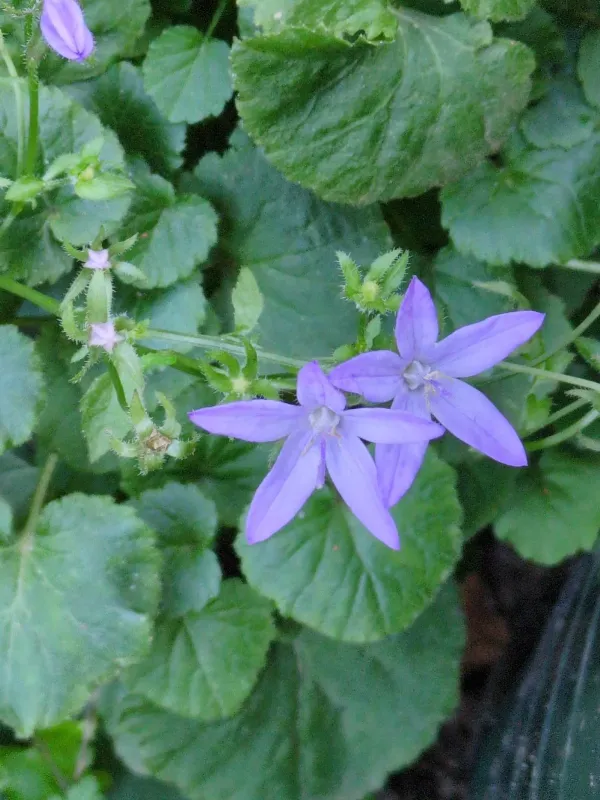
This plant is characterized by its prostrate, spreading stems which can extend up to 80 cm in length. The foliage is heart-shaped with serrated margins, forming a lush, dense carpet that maintains its ornamental appeal throughout the growing season.
Cultivation requirements for this species include bright, sunny positions or partial shade. It requires well-draining, slightly alkaline soil; wet or heavy clay soils can cause root rot, so incorporating gravel or sand into the planting hole is highly recommended.
In terms of agricultural and horticultural use, it is primarily utilized as a ground cover plant for rock gardens, retaining walls, and embankments. Its rapid growth and ability to form extensive mats make it an excellent choice for erosion control on slopes.
Maintenance involves regular watering during dry spells and light pruning after the main flowering period in summer. This practice encourages a secondary flush of star-shaped, lavender-blue flowers, keeping the plant tidy and promoting overall plant health.
Main diseases and pests
Slugs and snails are the most significant pests for this bellflower, especially in damp, shaded environments where they feed on the succulent leaves. Implementing slug pellets or physical barriers like copper tape can help mitigate damage to the foliage.
Fungal diseases, specifically root rot and crown rot, are common if the plant is grown in soil with poor drainage. To prevent these issues, ensure that the planting site remains well-aerated and avoid over-irrigation, especially during the dormant winter months.