
Bulgarian sheep's bit
Jasione bulgarica
Description
Growing requirements
Jasione bulgarica, commonly known as Bulgarian sheep's bit, is a perennial herbaceous plant belonging to the Campanulaceae family. It is native to the rocky, mountainous regions of the Balkan Peninsula, exhibiting high endurance to harsh environmental conditions.
The culture thrives in poor, rocky, and well-drained soils. Agricultural success with this species depends heavily on providing a substrate that mimics its natural habitat, avoiding any waterlogged conditions that can lead to root rot.
In terms of climate, the plant requires full sun exposure to flourish. While it is hardy and can withstand temperature fluctuations typical of high-altitude areas, it requires protection from excessive humidity and stagnant air.
Cultural practices are minimal as the plant is well-adapted to nutrient-poor soils. Fertilization is generally not recommended, as it can cause the plant to lose its compact, desirable habit and decrease the intensity of its flowering.
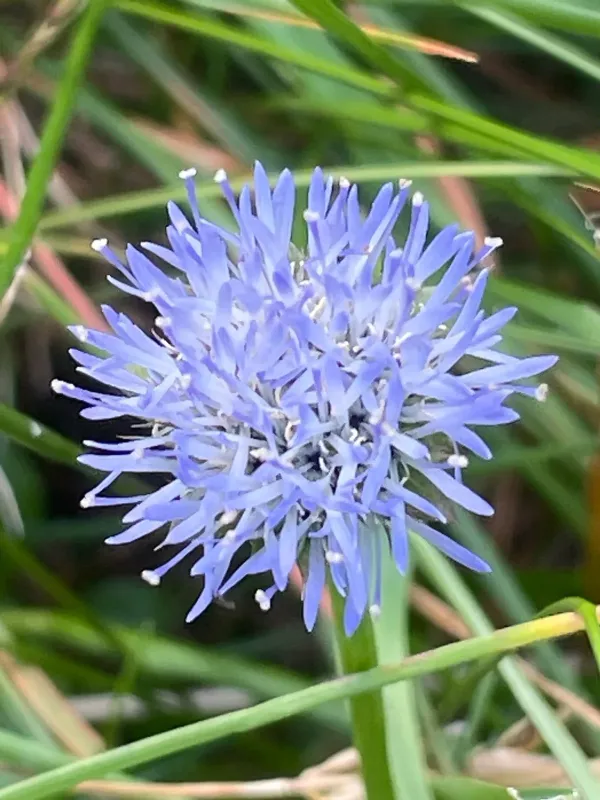
Its primary agricultural use is ornamental. It is highly valued in horticulture for rock gardens, crevice plantings, and dry gravelly borders, where its spherical, blue-colored flower heads provide excellent aesthetic contrast to foliage plants.
Main diseases and pests
The main threat to the health of the Bulgarian sheep's bit is root rot caused by poor soil drainage. Maintaining a dry environment around the crown of the plant is the most effective cultural prevention measure.
Slugs and snails can pose a significant threat, especially during the spring growth stage when new, succulent shoots are emerging. Using grit mulch around the base of the plant can help deter these pests from reaching the foliage.
Powdery mildew is a common fungal disease that affects the plant under conditions of high humidity or poor air circulation. Proper spacing and location choice are critical to keep the plants free from this infection.
Aphids can infest the flower stems during the flowering period, sucking plant sap and potentially transmitting viruses. Monitoring the plants during early summer and applying appropriate soaps or insecticides can control these outbreaks.
Soil nematodes are less frequent but can be devastating if present. To protect the crop, it is advised to use sterilized potting mixes when propagating the plant and to inspect new stock carefully before planting into the garden.