
Fairy's thimble
Campanula cochlearifolia Lam.
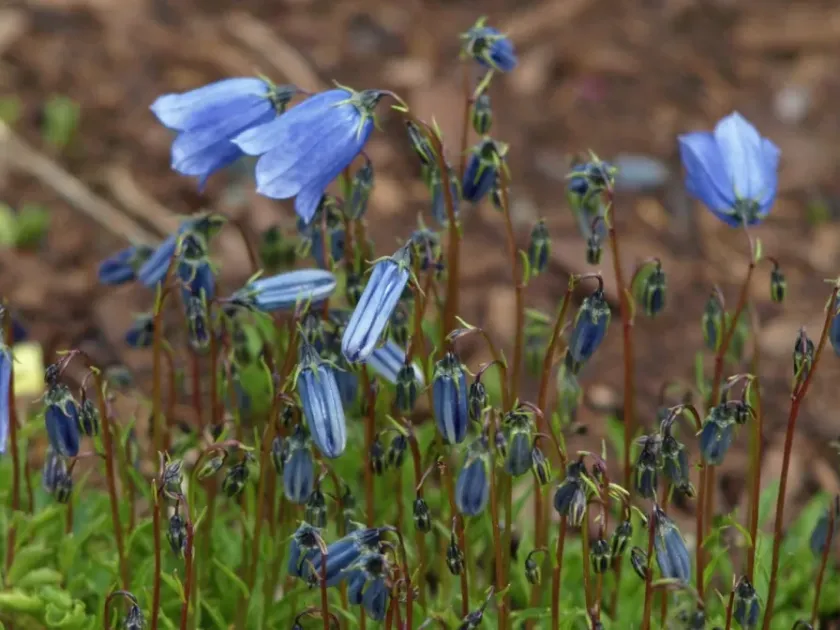
Description
Sowing dates
The seeds of the fairy's thimble (Campanula cochlearifolia) are typically sown in the autumn, allowing them to undergo natural stratification during the winter months.
If sowing in the spring, it is essential to keep the seeds in cold storage for several weeks to break dormancy and ensure a uniform germination rate.
Because the seeds are extremely small, they should be sown on the surface of the soil and should not be covered with a thick layer of substrate.
High levels of light are necessary for the successful germination of this species, so keeping the seed trays in a bright location is highly recommended.
Young seedlings should be carefully pricked out and planted in their final spots once they have developed a set of true leaves and enough root mass.
Growing requirements
As a member of the Campanulaceae family, this plant is native to mountainous European regions and naturally thrives on limestone cliffs and rocky slopes.
The plant requires well-drained soil with a slightly alkaline to neutral pH to mimic its native habitat conditions and prevent root rot issues.
It prefers a location with partial shade or spots that receive morning sun, as intense afternoon heat can negatively affect the plant's vitality.
Being an alpine species, it is highly hardy and perfectly adapted to low temperatures, making it a reliable perennial for cold climate gardens.
Regular maintenance involves keeping the soil consistently moist but never waterlogged, ensuring the plant receives adequate aeration throughout the season.
Main diseases and pests
Common health issues often involve fungal infections that stem from high humidity levels and lack of proper airflow around the delicate foliage.
Powdery mildew can occur if the plants are placed in stagnant air, leading to a visible white film on the leaves and stunted growth patterns.
Slugs and snails are the most frequent pests, as they are attracted to the succulent-like leaves and can cause significant damage in short periods.
Using coarse grit or gravel as a top dressing around the base of the plant can act as a natural deterrent against crawling mollusk pests.
Proactive care involves removing decaying leaf litter and ensuring that the plant is not overcrowded by more aggressive-growing neighboring species.