
Campanula garganica
Campanula garganica Ten.
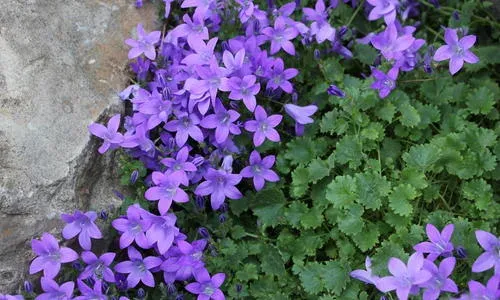
Description
Sowing dates
Campanula garganica is a perennial herb belonging to the Campanulaceae family, widely recognized for its creeping habit and star-shaped flowers.
Propagation is typically achieved through seeds sown indoors in early spring or directly in the garden after the last frost date has passed.
Due to the small size of the seeds, they should be surface-sown on moist, sterile soil and only lightly covered with vermiculite or fine compost.
Vegetative propagation via division of established clumps is highly effective and should be performed during the dormant season in spring or early autumn.
Pre-chilling seeds for a few weeks before sowing can significantly improve germination rates, mimicking the natural conditions of its mountain habitat.
Growing requirements
The plant originates from the mountainous regions of Italy, necessitating a well-draining, calcareous soil environment to prevent root rot issues.
It thrives in full sun or light shade, requiring a location that allows for adequate light penetration to support the dense, mat-forming growth pattern.
Water management is critical; while the plant requires consistent moisture during the establishment phase, it demands excellent drainage once mature.
The species is well-adapted to cooler climates, exhibiting significant frost resistance provided the soil remains free of waterlogging during winter months.
Regular maintenance involves light pruning after the primary flowering cycle to encourage dense foliage and potential secondary blooming in late summer.
Main diseases and pests
Slugs and snails pose the most significant threat to the plant, particularly in humid garden environments, often causing severe defoliation of the mats.
Poor aeration and high moisture levels can trigger fungal issues such as crown rot or powdery mildew, which compromise the plant's structural integrity.
Aphids may occasionally infest new growth during the spring, requiring manual removal or application of mild insecticidal soap if the colony grows too large.
Preventative measures include the use of gravel mulch, which keeps the foliage lifted from damp soil, significantly reducing the risk of fungal pathogens.
Monitoring the planting area for signs of chlorosis or leaf spots is essential, as these symptoms often indicate underlying soil or drainage deficiencies.