
Birch-leaved bellflower
Campanula betulifolia
Description
Growing requirements
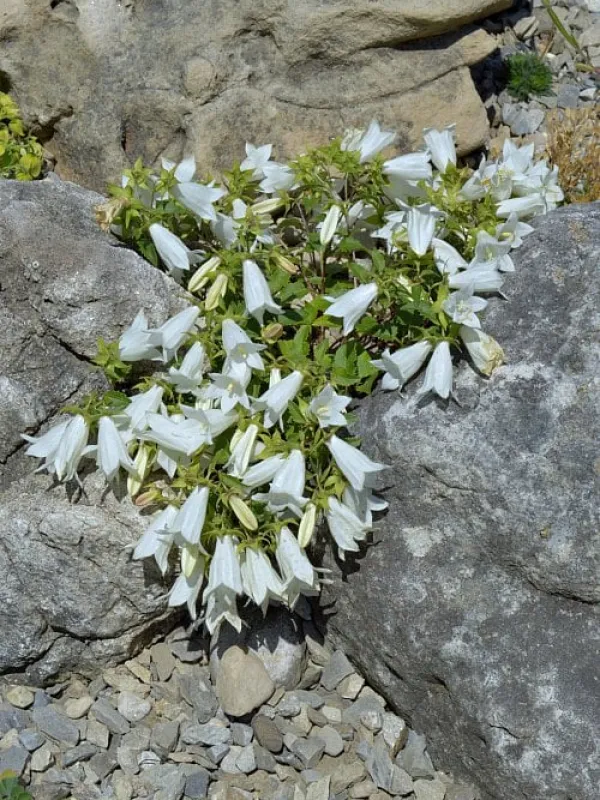
The Birch-leaved bellflower (Campanula betulifolia) belongs to the Campanulaceae family. It is a perennial herbaceous plant native to the rocky and mountainous regions of Turkey, adapted to life in narrow rock crevices.
The plant is distinguished by its unique birch-like foliage and large, bell-shaped flowers that transition from pale pink in the bud stage to pure white upon blooming. It typically forms dense, low-growing clumps suitable for alpine gardens.
Successful cultivation requires high-drainage, alkaline soil that mimics its natural stony habitat. The plant cannot tolerate stagnant moisture, making a deep layer of gravel or rocky substrates essential for preventing root rot and ensuring plant longevity.
It thrives in bright, sunny locations but benefits from partial shade during the peak heat of the day in warmer climates. The species is highly cold-hardy, making it a reliable choice for gardeners in temperate regions looking to populate rock walls.
Primarily valued as a decorative collector's plant, it is used extensively in rockeries and alpine displays. Its compact size and drought-tolerant nature after establishment make it a favorite for sustainable rock garden designs.
Main diseases and pests
Root rot is the most significant threat to Campanula betulifolia, usually triggered by overwatering or poor drainage systems. This fungal issue often affects the crown of the plant, leading to rapid decline during wet seasons.
Slugs and snails are the most common pests, particularly attacking the tender foliage and young shoots in early spring. Protective measures such as gravel barriers or organic deterrents are recommended to preserve the integrity of the leaves.
Aphids can occasionally infest the flower buds and tender stems, causing distortion of the blooms. Standard horticultural soap or targeted insecticides are effective in managing infestations without harming the delicate structure of the plant.
Powdery mildew is a risk factor when air circulation is limited or when the plants are grown in overly humid, stagnant environments. Promoting adequate spacing and ensuring the foliage remains dry helps prevent outbreaks.
Root nematodes represent a hidden threat that can stunt growth and weaken the plant's overall vigor. Maintaining soil health and opting for fresh, pathogen-free growing media is critical for long-term health in ornamental plantings.