
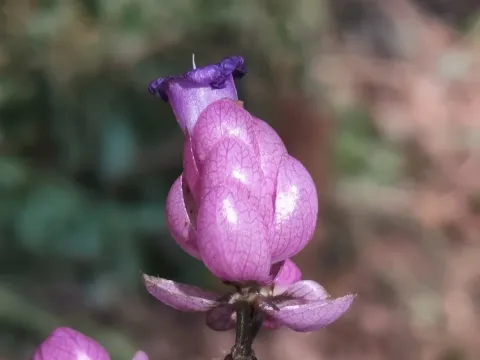
Strobilanthes
Strobilanthes
Strobilanthes is a genus of flowering plants in the family Acanthaceae, encompassing over 300 species of perennial herbs and shrubs native to tropical regions of Asia and Madagascar.
What the section contains
 Japanese conehead
Strobilanthes japonica
Japanese conehead
Strobilanthes japonica
 Spotted Strobilanthes
Strobilanthes maculata
Spotted Strobilanthes
Strobilanthes maculata
 Strobilanthes
 hybrids
Strobilanthes albostriata
Strobilanthes albostriata
Strobilanthes
Strobilanthes hybrids
Strobilanthes albostriata
Strobilanthes albostriata
 Strobilanthes atropurpurea
Strobilanthes atropurpurea
Strobilanthes atropurpurea
 Strobilanthes auriculata
Strobilanthes auriculata
Strobilanthes auriculata
 Strobilanthes calycina
Strobilanthes calycina
Strobilanthes calycina
 Strobilanthes cordifolia
Strobilanthes cordifolia
Strobilanthes cordifolia
 Strobilanthes cusia
Strobilanthes discolor
Strobilanthes discolor
Strobilanthes cusia
Strobilanthes cusia
Strobilanthes discolor
Strobilanthes discolor
 Strobilanthes flaccidifolia
Strobilanthes flaccidifolia
Strobilanthes flaccidifolia
 Strobilanthes hamiltoniana
Strobilanthes hamiltoniana
Strobilanthes hamiltoniana
 Strobilanthes kunthiana
Strobilanthes kunthiana
Strobilanthes kunthiana
 Strobilanthes oligantha
Strobilanthes pterygorhachis
Strobilanthes pterygorhachis
Strobilanthes oligantha
Strobilanthes oligantha
Strobilanthes pterygorhachis
Strobilanthes pterygorhachis
 Strobilanthes rankanensis
Strobilanthes rankanensis
Strobilanthes rankanensis
 Strobilanthes scaber
Strobilanthes tomentosa
Strobilanthes tomentosa
Strobilanthes scaber
Strobilanthes scaber
Strobilanthes tomentosa
Strobilanthes tomentosa
Strobilanthes
This crop thrives in warm environments, requiring temperatures between 20°C and 25°C. Exposure to temperatures below 15°C can cause significant physiological stress and growth retardation.
The plant necessitates a well-draining, nutrient-rich, and slightly acidic soil medium. A mixture of peat moss, perlite, and high-quality potting soil ensures adequate root aeration and moisture retention.
Humidity is a critical factor for Strobilanthes, as it originates from moist forest floors. Maintaining humidity levels around 60-70% is essential for healthy leaf development and vibrant color expression.
Light requirements are best met with bright, indirect sunlight. While some light is needed for photosynthesis, harsh direct sun should be avoided to prevent scorched leaf tips and foliage wilting.
The most common pest affecting Strobilanthes is the spider mite, which thrives in environments where humidity levels are insufficient for the plant's needs.
Mealybugs and whiteflies also present significant threats to the crop. These pests congregate on the undersides of leaves and stems, sucking the plant's sap and weakening its structure.
Root rot is the primary disease risk, often caused by overwatering or poorly draining soil. When the substrate remains waterlogged, pathogens rapidly colonize the root system.
Integrated pest management, including regular inspection and the use of insecticidal soaps, is recommended to keep pest populations under control.
Ensuring proper container drainage and allowing the top inch of soil to dry slightly between waterings are the most effective ways to prevent fungal and bacterial complications.