
Spotted Strobilanthes
Strobilanthes maculata
Description
Growing requirements
Strobilanthes maculata, commonly known as the spotted strobilanthes, belongs to the diverse Acanthaceae family. Originating from the tropical regions of Southeast Asia, this species thrives in humid forest floors where it is protected from direct, intense sunlight.
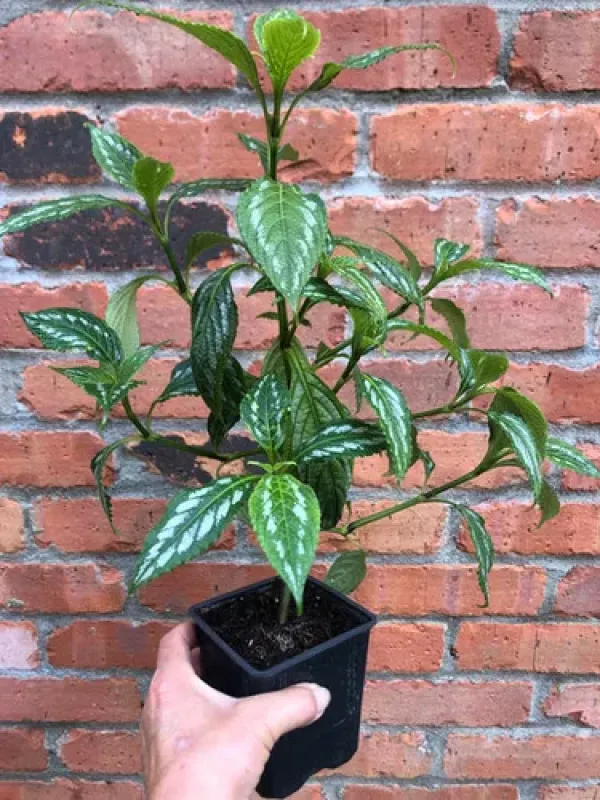
The plant is prized for its unique foliage, which typically features striking patterns or spots, often contrasting with a dark green background. It maintains a compact habit, making it an excellent candidate for specialized indoor collections or greenhouse displays.
Success in cultivation requires a stable environment with high atmospheric humidity and temperatures ideally between 20 and 25 degrees Celsius. It is highly sensitive to cold drafts, which can lead to rapid leaf senescence and stunted growth.
The soil requirements are specific: the medium must be well-draining yet capable of retaining moisture. A mixture of peat, perlite, and high-quality potting soil works best to ensure root health and prevent the accumulation of salts or excessive water.
Regarding moisture management, the soil should be kept consistently moist but never waterlogged. During the growing season, a balanced liquid fertilizer applied at half-strength every few weeks is sufficient to support the vibrant foliage development.
Main diseases and pests
The most significant pests affecting Strobilanthes maculata include spider mites, which thrive in dry indoor environments. Infestations are usually characterized by fine webbing on the undersides of the leaves and yellow stippling on the upper surface.
Fungal diseases are predominantly caused by poor air circulation and excessive moisture on the leaf surfaces. To prevent these issues, it is essential to ensure adequate spacing between plants and to avoid overhead watering whenever possible, focusing moisture delivery strictly at the root zone.