
Aceras
Aceras
Description
Growing requirements
Aceras is a genus of perennial terrestrial orchids within the Orchidaceae family. In contemporary botanical classification, it is often taxonomically merged with the genus Orchis, yet it remains a significant subject of study due to its distinct evolutionary adaptations and unique floral structure.
These plants are native to the Mediterranean region, Central and Southern Europe, and parts of the Middle East. They naturally thrive in calcareous grasslands, open forest clearings, and slopes where soil conditions are neutral to alkaline. They are highly sensitive to soil chemistry and rely on specific mycorrhizal fungi for germination and early development.
In terms of agricultural or commercial context, Aceras is not a crop. It is considered a rare wild plant that requires specific environmental conditions to survive. Because of this, cultivation efforts are restricted to protected environments such as botanical gardens or specialized conservation programs that strictly regulate soil composition and moisture levels.
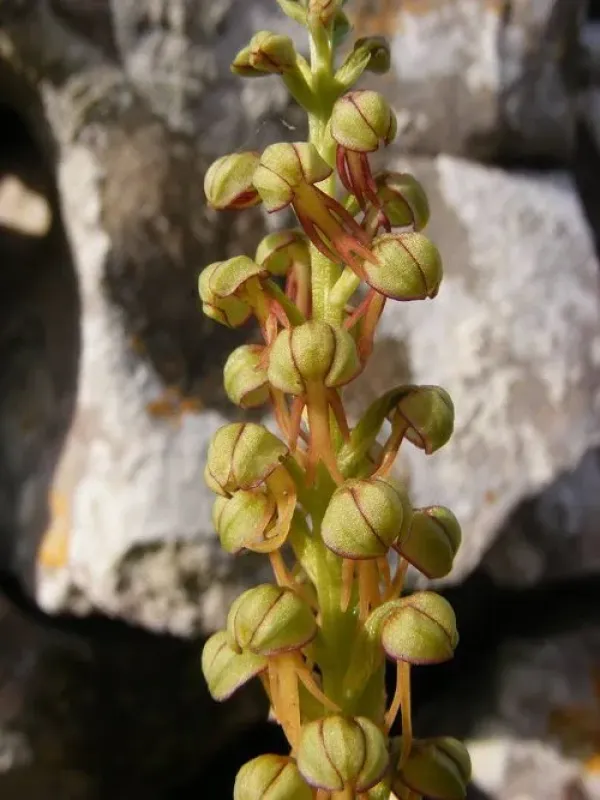
Botanically, Aceras is characterized by two tuberous roots and a simple stem topped with a spike-like inflorescence. The flowers are notable for their lack of a nectar spur, which is a rare trait in this orchid group. This feature is the origin of the name 'Aceras,' meaning 'hornless' in Greek.
The conservation status of these plants is critical in many regions due to habitat destruction and the loss of natural pollinators. Management and protection of their natural habitats are the primary methods of ensuring the survival of the species, as they do not possess qualities suitable for conventional farm production or industrial exploitation.