
Strobilanthes kunthiana
Strobilanthes kunthiana
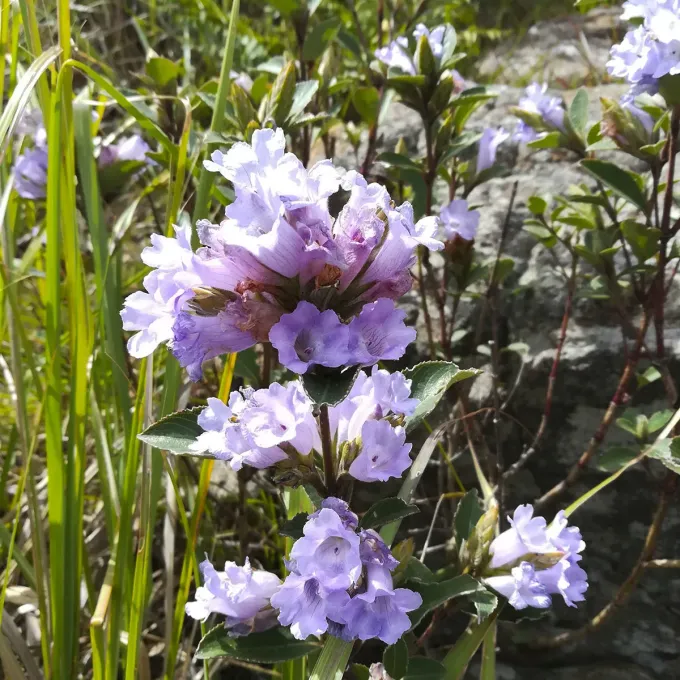
Description
Growing requirements
Strobilanthes kunthiana, widely recognized as Neelakurinji, is a rare shrub belonging to the Acanthaceae family. This species is indigenous to the Shola forests and grasslands of the Western Ghats in South India, growing at high altitudes.
The plant thrives in cool, moist, high-altitude climates. It requires significant atmospheric humidity and well-drained, acidic to neutral soil rich in organic matter. In cultivation, mimicking the natural forest floor environment is crucial for success.
Botanically, it is famous for its unique reproductive strategy, flowering gregariously once every 12 years. During the vegetative phase, the shrub exhibits dense, branching growth, reaching heights of approximately 30 to 60 centimeters in its standard form.
Temperature regulation is vital, as the plant does not tolerate extreme heat or frost. Exposure to direct sunlight should be carefully managed, as the species naturally prefers the dappled shade provided by mountain forest canopies.
The cultivation of this plant serves primarily scientific and conservation purposes. Due to its long developmental cycle, it is not a commercial crop in the traditional sense, but it remains a subject of intense study for botanical research and ecological preservation.
Main diseases and pests
Habitat fragmentation remains the primary threat to the natural populations of Strobilanthes kunthiana. The conversion of mountain lands into tea or coffee estates significantly restricts the available space for the natural regeneration of this species.
Pest management is challenging due to the plant's sensitivity to synthetic pesticides. Common pests include various mites and foliage-feeding insects, which are best managed through biological control and maintenance of optimal plant health.
Fungal pathogens represent a significant risk, particularly root rot, which is often induced by waterlogging in the potting mix. Proper aeration and the use of porous, well-draining soil media are essential to mitigate these biological threats.
Nutrient imbalances in the soil can lead to physiological stress, making the plants more susceptible to secondary infections. Regular monitoring of the substrate pH and nutrient levels is recommended for greenhouse-grown specimens.
Climate change poses a long-term risk to the synchronization of the flowering cycle, which is essential for the plant's pollination and seed dispersal mechanisms. Protecting the ecological integrity of its native environment is the most effective safeguard.