
Strobilanthes discolor
Strobilanthes discolor
Description
Growing requirements
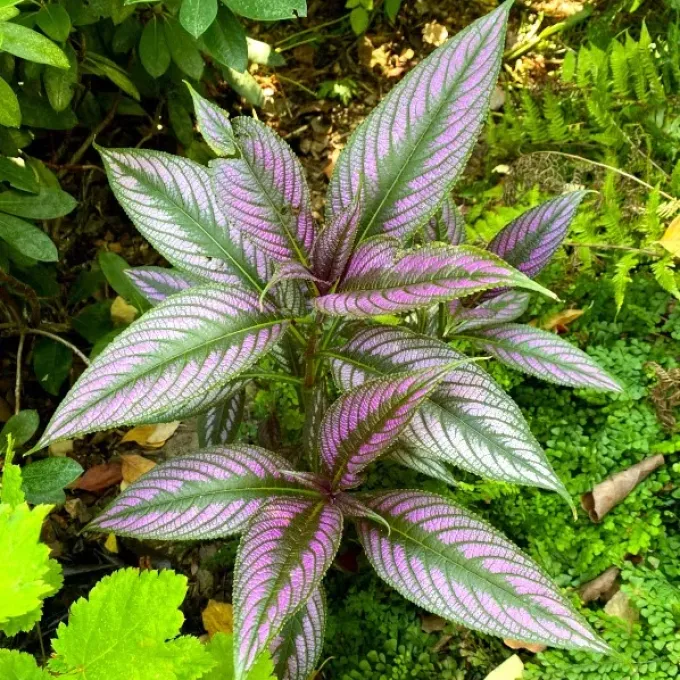
Strobilanthes discolor is an evergreen perennial plant belonging to the Acanthaceae family. It is recognized for its unique foliage, which provides a high aesthetic value in both indoor and tropical landscape applications.
Native to the humid regions of Southeast Asia, this species thrives in understory conditions. It has evolved to perform best in environments that mimic tropical forest floors with filtered sunlight and high ambient humidity levels.
The climate requirements include maintaining stable temperatures between 18°C and 25°C. The species is highly sensitive to cold drafts and sudden drops in temperature, which can trigger leaf drop and physiological stress.
Soil management should prioritize drainage and moisture retention. A rich, loamy, and slightly acidic substrate is considered optimal for the vigorous growth of this plant, ensuring that the root system remains oxygenated while hydrated.
Regular maintenance involves constant hydration, as the plant does not tolerate significant drought. However, strict attention must be paid to drainage holes to prevent the accumulation of stagnant water, which often leads to root rot.
Main diseases and pests
The most common pests affecting Strobilanthes discolor are spider mites, which thrive in low-humidity environments. Their feeding activity results in chlorosis and eventual necrosis of the leaves if left untreated.
Whiteflies and mealybugs are secondary pests that can significantly weaken the plant. Integrated pest management (IPM) strategies, including the use of neem oil or soft soap solutions, are effective at maintaining population control.
Fungal infections, primarily root and crown rot, represent the most significant threat to plant longevity. These pathogens often colonize the host when the soil structure breaks down or when excess moisture persists for extended periods.
Powdery mildew may occur on the leaf surfaces during high-humidity periods with stagnant air. Increasing air circulation around the canopy is a critical cultural practice to mitigate the risk of fungal spore germination.
To ensure healthy development, proactive monitoring is essential. Agronomists recommend removing yellowed or spotted leaves immediately and isolating affected plants to prevent the spread of localized pathogen outbreaks within the crop area.