
Strobilanthes
Strobilanthes hybrids
Description
Growing requirements
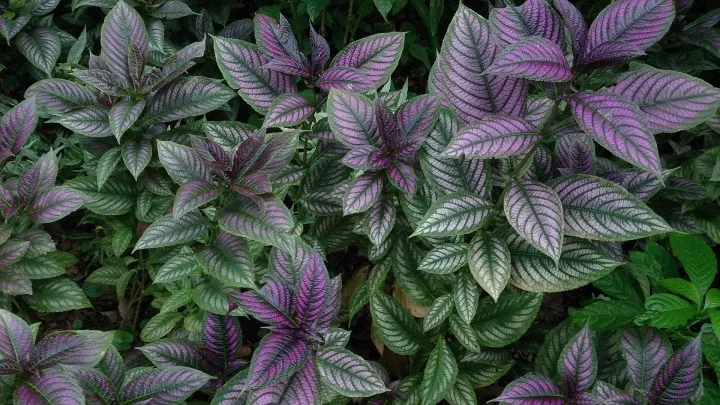
Strobilanthes hybrids belong to the Acanthaceae family. These plants are widely recognized for their metallic-colored foliage, which features unique iridescent patterns that make them a popular choice for ornamental horticulture.
Originating from tropical regions, this species thrives in environments that replicate the warmth and humidity of its native rainforest habitat. A stable temperature ranging from 20 to 25 degrees Celsius is essential for optimal leaf development.
Watering requirements are specific, as the plant needs a consistently moist, but not waterlogged, substrate. The plant should be watered thoroughly whenever the top layer of the soil feels slightly dry to the touch.
The soil mix must provide excellent drainage, as the roots are highly susceptible to rot if they sit in standing water. A mixture consisting of peat moss, perlite, and high-quality potting compost is recommended for best results.
Bright, indirect light is necessary to maintain the plant's intense foliage color. If the light intensity is too low, the plant will become leggy, and the vibrant metallic sheen of the leaves will begin to fade significantly.
Main diseases and pests
Spider mites are the most common pest, particularly in environments where the air humidity is insufficient. These mites damage the leaves by piercing the tissue, leading to small yellow spots and fine webbing.
Mealybugs can also infest the plant, usually gathering in the axils of the leaves or on the undersides of the foliage. Infestations should be managed immediately with appropriate insecticidal soaps or systemic treatments.
Root rot is a major physiological threat often caused by improper watering techniques. Symptoms include wilting leaves that do not recover after watering, eventually leading to stem collapse.
Fungal leaf spots can occur when foliage remains wet for prolonged periods in poorly ventilated areas. Keeping the leaves dry and ensuring good airflow around the plant is the best method of prevention.
Regular monitoring of the plant's condition is recommended for early detection of potential threats. Maintaining balanced fertilization during the active growing season also helps the plant resist common diseases and pests.