
Abrus melanospermus
Abrus melanospermus
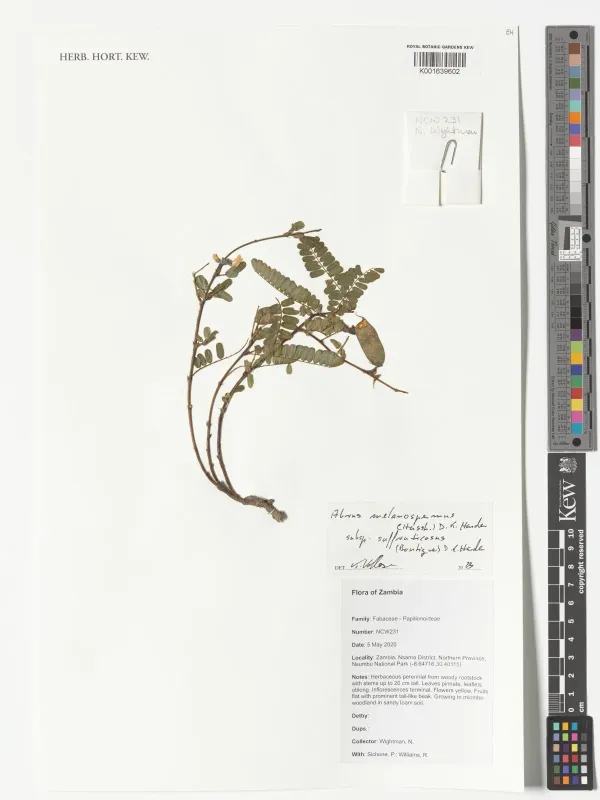
Description
Sowing dates
Abrus melanospermus is a perennial tropical vine belonging to the Fabaceae family. As a heat-loving plant, its cultivation requires strict adherence to temperature regimes, making it suitable primarily for tropical regions or climate-controlled greenhouse environments in cooler zones.
Seed germination is most successful at temperatures between +25 and +30 degrees Celsius. Because the seeds are protected by a very hard coat, mechanical or chemical scarification is often employed to allow moisture to reach the embryo and initiate growth.
In its natural habitat, planting usually coincides with the beginning of the rainy season, which provides the necessary humidity for the establishment of the root system. Indoors, covering the seeds with a transparent film helps maintain the microclimate needed for sprouting.
Seeds should be sown in a well-draining, nutrient-rich substrate at a depth of approximately 2 centimeters. Maintaining a consistent moisture level in the growing medium is essential during the first weeks after sowing to ensure even emergence.
Once seedlings have emerged, they require plenty of bright, indirect light to prevent the stems from becoming leggy. As a climbing vine, the plant will need vertical support structures as soon as the first true leaves are developed.
Growing requirements
The plant thrives in well-draining, fertile soil with a slightly acidic to neutral pH level. It is highly susceptible to root diseases caused by waterlogged soil, so proper drainage is non-negotiable for successful crop maintenance.
Abrus melanospermus requires significant amounts of solar radiation but prefers light shade during the hottest midday hours to prevent leaf scorching. In greenhouse settings, supplemental lighting may be necessary if natural light levels are insufficient.
The temperature must remain consistently above +20 degrees Celsius during the active growing season. The plant is extremely sensitive to cold, and temperatures dropping below +10 degrees Celsius can cause irreversible physiological damage to the vine.
Watering should be frequent but mindful of the soil moisture status; allowing the top layer of soil to dry slightly between waterings helps prevent fungal infections. Humidity levels should be kept in the moderate to high range to mimic its native habitat.
Fertilization should be applied during the peak of the growing season. A balanced, water-soluble fertilizer is usually sufficient, though a shift toward phosphorus and potassium-rich blends is recommended as the plant approaches its flowering stage.
Yield
The yield of Abrus melanospermus is evaluated based on the production of seed pods. While not a primary food crop, it holds interest for its botanical and chemical properties. The vine can produce several flushes of pods per season under ideal conditions.
Cross-pollination is often necessary for successful pod set. In controlled agricultural environments, hand-pollination can be used to ensure a higher density of seed pods on the vine, especially where natural pollinators are not present.
The quantity of seeds per pod typically ranges from four to eight. Proper canopy management and training the vine to climb effectively allow for better air circulation and light penetration, which directly contributes to higher harvest volumes.
Timely harvesting is essential for maximizing yield. As the pods mature, they lose their green color and become brittle. If not harvested promptly, the pods may naturally dehisce, resulting in the loss of seeds as they drop to the ground.
Yield management requires careful observation of the maturation stages of the pods across different sections of the vine. Harvesting from the lower canopy upwards is generally the most efficient strategy for this species.
Main diseases and pests
Common pests include spider mites and mealybugs, which thrive in low-humidity environments. These pests can severely weaken the plant by feeding on the sap of the young, tender leaves and causing chlorosis or stunted growth.
Fungal pathogens such as Fusarium and powdery mildew are significant threats, particularly when ventilation is poor or soil moisture is excessive. Maintaining clean tools and sterile growing environments is key to preventing these diseases.
Root rot is the most common cause of failure in this crop. It is almost always a result of poor drainage or over-irrigation in stagnant conditions. Preventive measures include using sandy, porous soil mixes and appropriate pot sizing.
- Frequent monitoring of the underside of leaves for pest clusters.
- Ensuring adequate spacing to allow for constant air circulation.
- Early removal and destruction of any plant parts showing symptoms of fungal infection.
For pest control, systemic insecticides and acaricides may be used, provided they are applied during the cooler parts of the day. Integrated pest management (IPM) practices are highly encouraged to reduce chemical reliance and protect potential beneficial insects.
Harvesting
Harvesting should be conducted when the pods have fully changed color from green to brown or black, signaling that the seeds have reached physiological maturity. This stage ensures that the seeds have the best longevity in storage.
Due to the plant's nature, harvesting should be performed with caution. Using shears to cut the pods from the vine helps avoid damaging the stems and allows for a more controlled collection of the seed material.
After collection, the seeds must be separated from the pods and cleaned of any organic debris. Drying the seeds in a shaded, well-ventilated area for several days is crucial to ensure that any surface moisture is eliminated before long-term storage.
Seed quality should be assessed by inspecting for any physical damage or signs of rot. High-quality seeds are dense and uniform in color, representing the viability of the harvest for future planting or processing.
Storage should take place in a cool, dark, and dry environment. Utilizing airtight containers or cloth bags can help maintain seed vitality for several seasons, although freshness is always preferred for the highest germination rates.