
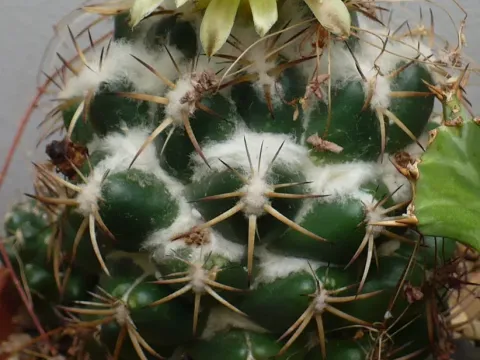
Coryphantha werdermannii
Coryphantha werdermannii
Sowing seeds of Coryphantha werdermannii is best performed in early spring as day length increases. March or April is the optimal window, ensuring that the seedlings gain sufficient strength before the dormant winter season.
What the section contains
Coryphantha werdermannii
Use shallow containers equipped with a reliable drainage layer at the bottom. The substrate must be highly porous and well-aerated, composed of a mix of coarse sand, perlite, and a small amount of sterile leaf mould.
Seeds should be sown on the surface and pressed gently into the substrate without deep burial. Covering the tray with clear film or glass creates the necessary humidity and maintains a steady temperature of 22–25 degrees Celsius.
Regular ventilation is vital to prevent fungal growth on the soil surface. As germination progresses, the covering should be gradually removed to acclimate the young cacti to ambient indoor conditions.
Transplanting (pricking out) the seedlings is done only when they reach a size that allows safe handling without damaging the delicate root system. This typically occurs several months after germination.
Coryphantha werdermannii belongs to the Cactaceae family and is native to arid Mexican landscapes. The species is adapted to intense sunlight and requires high light exposure throughout the year to maintain its natural structure.
The ideal soil mix is mineral-based with minimal organic matter. A suitable substrate includes loam, coarse sand, fine gravel, and brick chips, which facilitate rapid water drainage and prevent root suffocation.
During the growing season, watering should be moderate and performed only when the soil has completely dried out. Waterlogging is extremely dangerous as it rapidly leads to root rot and permanent plant damage.
Winter dormancy requires dry conditions and cool temperatures between +8 and +12 degrees Celsius. Ceasing irrigation during this time is essential to trigger proper development and induce future flowering.
While the cactus tolerates high heat, it thrives in well-ventilated areas. Effective air circulation prevents root overheating and mitigates the risk of pathogens common in stagnant, humid environments.
Root rot, often caused by excessive watering, is the most common fatal condition for this species. Prevention is far superior to treatment, making rigorous moisture control the primary focus of successful maintenance.
Spider mites are prevalent pests that attack the skin of the cactus in dry, low-humidity environments. Immediate application of systemic acaricides is necessary upon the first signs of webbing to save the plant.
Mealybugs often hide within the deep crevices between the cactus tubercles, feeding on internal sap. These pests should be carefully removed with a cotton swab soaked in isopropyl alcohol or treated with targeted insecticides.
Root-knot nematodes can severely affect growth and overall health. During repotting, it is standard practice to inspect roots for galls or swellings, treating any infestations with appropriate soil drenches.
Cultivation errors, such as subjecting the cactus to cold and damp conditions simultaneously, result in unsightly spots and tissue necrosis. Consistent monitoring of environmental parameters is essential for plant vitality.