
Coryphantha retusa
Coryphantha retusa
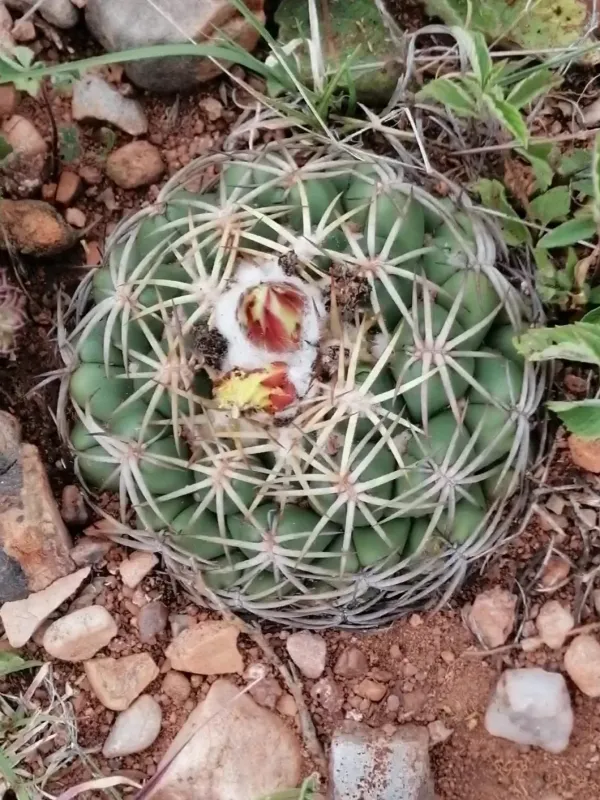
Description
Sowing dates
Seed propagation is the primary method for obtaining Coryphantha retusa specimens on both a commercial and hobbyist scale. The optimal time for sowing is during the spring season, when the daylight hours begin to increase significantly.
For seed germination, a stable temperature range between +22 and +26 degrees Celsius is required. Sowing is performed in a loose, sterile substrate with a high sand content, taking care not to bury the seeds too deeply in the soil.
Maintaining constant soil moisture during the initial stages of seedling development is critical. Containers should be covered with transparent film or glass to create a greenhouse effect, which promotes uniform germination.
Once the first spines appear (after 2–4 weeks), seedlings should be gradually accustomed to lower humidity. Pricking out is performed only when the young cacti are strong enough and have reached the size of a pea, which usually takes about six months.
When cultivating this species, it is important to note that it grows quite slowly. Specimens grown from seeds usually reach full maturity and flowering only after 4 to 6 years of growth.
Growing requirements
Coryphantha retusa belongs to the Cactaceae family and is native to the arid regions of Mexico, specifically the states of Oaxaca and Puebla. In its natural environment, the plant has adapted to high insolation levels and stony soil conditions.
For successful cultivation, maximum sunlight exposure is required throughout the growing season. If light is insufficient, the stem will stretch, losing its characteristic flattened-globose shape and natural color.
The soil mixture must have excellent drainage properties to prevent water stagnation around the root system. An ideal substrate is a mixture of leaf mold, turf, and coarse-grained sand or gravel in a 1:1:2 ratio.
During the summer, the plant requires moderate watering only after the soil ball has completely dried out. Winter brings a period of forced dormancy, during which watering is reduced to a minimum or stopped entirely, and the temperature is lowered to +10...+12 degrees Celsius.
The plant does not tolerate high air humidity combined with low temperatures well. Good air circulation is an essential factor for preventing the development of fungal skin diseases.
Main diseases and pests
The primary threat to this cactus is root rot, which typically occurs due to excessive watering during cooler periods. Once started, decay can quickly spread to the plant's main body, often leading to total loss of the specimen.
Among pests, the spider mite is a major concern, manifesting as fine webbing and discolored spots on the stem. Targeted acaricide treatments are effective in managing this pest.
The root mealybug is a stealthy pest that attacks the underground part of Coryphantha retusa. Stunted growth, despite proper care, is often a key symptom of an infestation within the soil.
Scale insects and false scale insects may settle in the axils of the cactus tubercles. These should be removed manually with a cotton swab dipped in rubbing alcohol or treated with systemic insecticides.
To prevent infections and pest buildup, it is vital to maintain a clean growing environment and perform regular inspections. Repotting into fresh substrate every two years also helps reduce the risk of pest accumulation in the soil.