
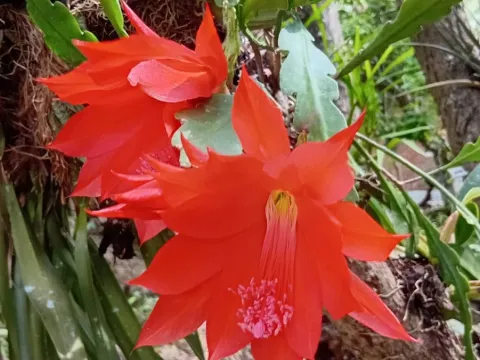
Disocactus
Disocactus Lindl.
Disocactus is a genus of epiphytic cacti belonging to the Cactaceae family, native to the tropical forests of Mexico, Central, and South America. These plants are biologically adapted to grow on trees, relying on specialized substrates and high humidity levels typical of tropical rainforest ecosystems.
What the section contains


Disocactus
For successful cultivation, Disocactus requires bright but filtered light. Exposure to direct harsh sunlight can damage the stems and stunt growth. A temperature range between 20°C and 25°C is ideal for growth, while a slight temperature drop during winter helps the plant enter a period of rest.
The substrate must be well-draining, loose, and rich in organic matter. A mixture consisting of pine bark, peat moss, perlite, and leaf mold mimics the natural environment of an epiphyte, providing enough air circulation around the root system to prevent common moisture-related problems.
Watering should be conducted carefully, ensuring the soil remains moist but never waterlogged. As epiphytes, these cacti prefer high ambient humidity, which can be achieved through regular misting. During the active growing season, diluted, balanced fertilizers are recommended to promote flowering.
In professional and amateur horticulture, Disocactus is prized for its ornamental value. Due to its unique stem morphology and spectacular, often vibrant flowers, it is widely utilized as a hanging basket plant, effectively enhancing interiors and botanical collections.
Mealybugs and spider mites are the most common pests affecting Disocactus, particularly in indoor environments with low humidity. Regular cleaning of the stems and the use of horticultural oils or appropriate insecticides can successfully manage and eliminate these infestations.
Fungal pathogens such as root rot are the primary threats, usually caused by overwatering or poor drainage. To prevent these infections, growers should ensure strict control over the irrigation schedule and use sterile growing media to promote long-term plant health.