
Coryphantha delaetiana
Coryphantha delaetiana
Description
Growing requirements
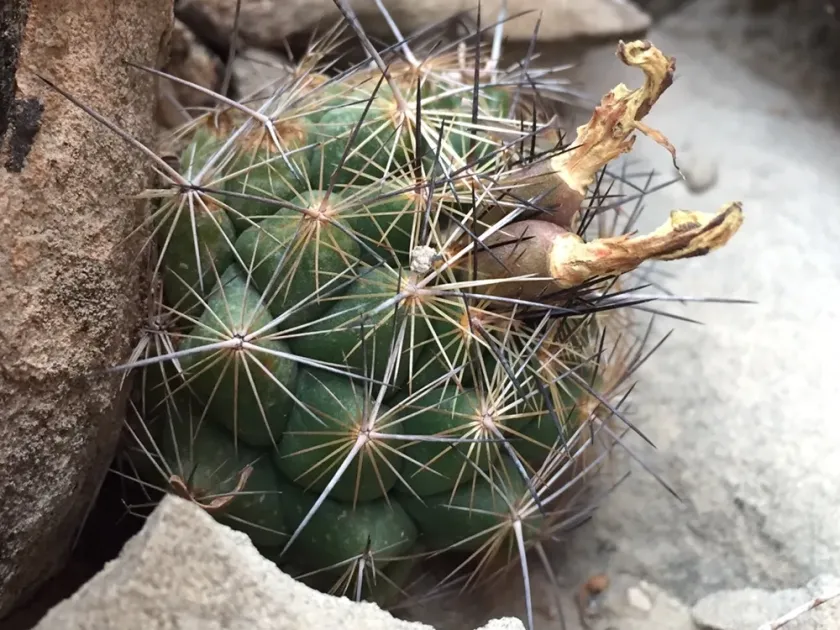
Coryphantha delaetiana is a distinct succulent species belonging to the Cactaceae family. Native to the arid regions of northern Mexico, specifically within the states of Coahuila and Chihuahua, this cactus has evolved to thrive in rocky environments with limited annual precipitation.
The morphology of this plant is characterized by a globular to short cylindrical stem adorned with dense radial and central spines. A defining botanical feature of the genus Coryphantha is the presence of a distinct groove on the upper side of the tubercles, which is essential for identification.
Successful cultivation requires a location with maximum sunlight exposure to maintain the plant's natural form and health. Insufficient lighting often leads to etiolation, which compromises the structure and prevents the plant from reaching its full flowering potential during the summer months.
The substrate must be highly inorganic, prioritizing excellent drainage and aeration. A mix consisting of coarse sand, perlite, and small gravel with only a minimal fraction of organic potting soil is recommended to prevent root asphyxiation, a common issue in indoor environments.
In terms of agricultural and horticultural use, this species is strictly ornamental. It is primarily valued by specialized collectors for its symmetrical form and the display of large, vibrant flowers. Due to its slow growth rate, it is well-suited for container gardening in temperate or arid climate zones.
Main diseases and pests
The primary threats to Coryphantha delaetiana include various root and stem rot diseases, typically caused by fungi such as Phytophthora or Pythium. These occur when the plant is kept in overly moist conditions or in soil with poor porosity, highlighting the need for rigorous irrigation management.
Insect pests such as spider mites and mealybugs present significant challenges to plant health. These pests often hide between the tubercles and the dense spinal covering, making manual removal difficult. Preventive measures include ensuring good ventilation and using systemic pesticides when early signs of infestation are detected.