
Cochenille cactus
Opuntia cochenillifera
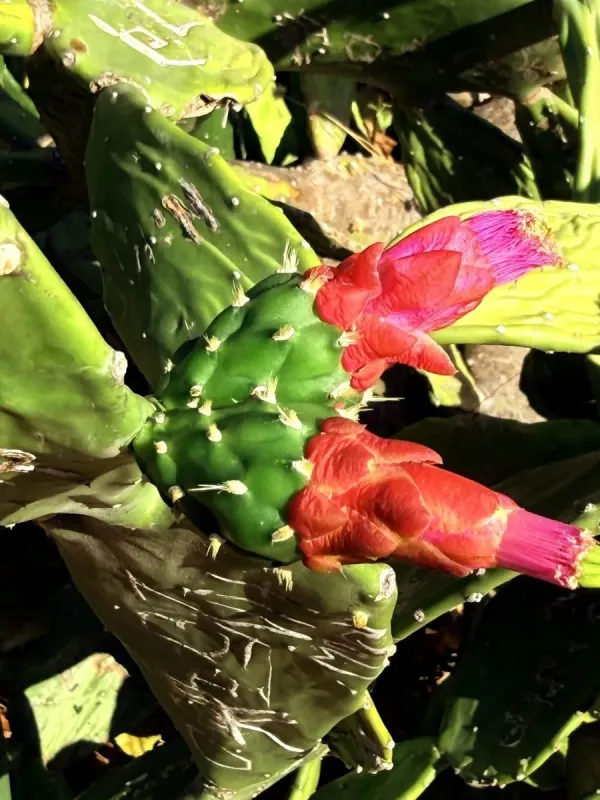
Description
Sowing dates
Propagation of the cochenille cactus (Opuntia cochenillifera) is primarily achieved through vegetative cuttings using mature cladodes. This method ensures the preservation of the desired traits of the plant.
Before planting, the cuttings must be allowed to callus over for several days in a dry, shaded area. This critical step prevents the entry of soil-borne pathogens and minimizes the risk of rotting after contact with the substrate.
The ideal planting time is during the early growth season when soil temperatures are consistently above 20°C, providing the plant with enough energy for rapid root development.
Cuttings should be inserted vertically into the soil to one-third of their length. Proper depth is essential to maintain stability and prevent the cuttings from toppling over before the roots have taken hold.
Minimal irrigation is required in the initial phase. Overwatering immediately after planting often leads to the failure of the root system, as the succulent needs time to adapt to its new environment.
Growing requirements
Opuntia cochenillifera is a member of the Cactaceae family and is highly adapted to arid and semi-arid conditions. It thrives in environments with intense solar radiation and high temperatures.
The plant requires well-drained, sandy or gravelly soils. Heavy, clay-rich soils that retain excess moisture are detrimental to its health and should be avoided to prevent fungal infections.
Climate is the most significant factor in production. The species is sensitive to frost and freezing temperatures; therefore, it is best suited for tropical and subtropical climates where temperatures remain consistently mild.
While the cactus can grow in nutrient-poor soils, modest additions of organic matter can improve plant vigor and growth rates in commercial operations.
The species exhibits high tolerance to salinity, making it an excellent crop for utilizing degraded or marginal lands where traditional agriculture may be non-viable.
Yield
The primary agricultural utility of this species is as a host plant for the cochineal scale insect (Dactylopius coccus), which is harvested to produce the natural red pigment carmine.
Besides dye production, the plant serves as a vital forage crop. The pads, once cleared of spines, provide a rich source of water and nutrients for livestock during dry seasons.
The fruits of the plant are edible and have gained commercial interest in the food processing industry due to their sweet flavor profile and antioxidant content.
Yield metrics depend on the intensity of the plantation management, including pest monitoring for the cochineal insects and the frequency of pad harvesting.
In well-managed systems, the dual-purpose use of the biomass for forage and cochineal production allows for high economic returns in regions with limited water resources.
Main diseases and pests
The most common issues for Opuntia plantations include fungal rot, which manifests as soft, discolored spots on the pads when drainage is inadequate or humidity is too high.
Uncontrolled pest infestations, such as invasive mealybugs or mites, can severely stress the plant, leading to reduced growth and poor health if not managed promptly.
- Root rot caused by stagnant water in the substrate.
- Stem borer damage impacting the structural integrity of the pads.
- Viral transmission through non-sterilized pruning equipment.
- Damage caused by small rodents seeking hydration from the succulent tissue.
Integrated Pest Management (IPM) practices are highly recommended to balance the health of the host plant with the needs of the desired cochineal insect population.
Maintaining proper spacing between rows is a simple yet effective preventative measure that improves airflow and reduces the risk of moisture-related disease outbreaks.
Harvesting
Cochineal harvesting requires delicate handling. Insects are typically collected by scraping them off the pads using specialized brushes, ensuring that the plant tissue remains unharmed.
For forage production, pads are harvested using sharp, clean tools. Strategic pruning is essential to allow the plant to regenerate quickly and maintain long-term productivity.
The fruits must be harvested precisely at the point of maturity to ensure the best sweetness and shelf life. Overripe fruits are prone to physical bruising and rapid decay.
Transporting harvested materials requires careful handling in ventilated crates to prevent physical damage and the buildup of excess moisture that might trigger spoilage.
Storage must be in a cool, dry environment with good air circulation to ensure that the biomass remains in peak condition for processing or market sale.