
Coryphantha longicornis
Coryphantha longicornis
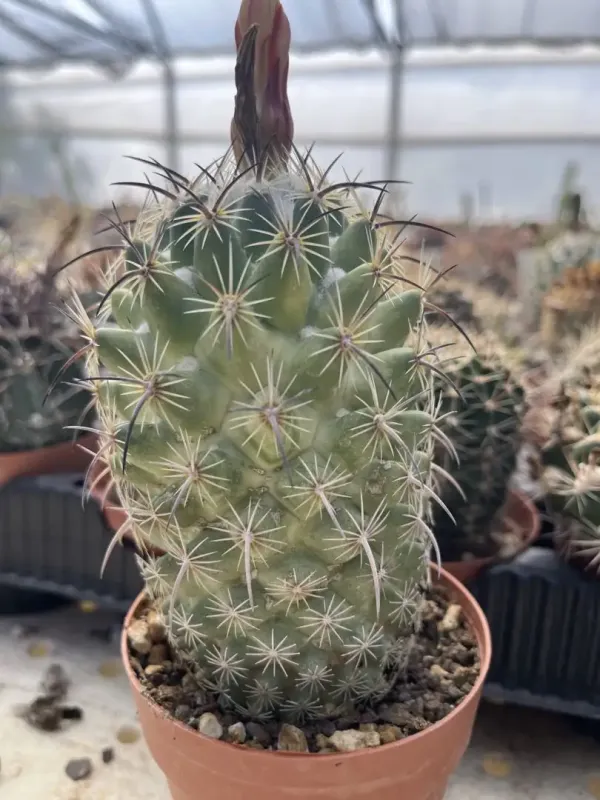
Description
Growing requirements
Coryphantha longicornis is a distinct succulent species belonging to the Cactaceae family. Native to the arid regions of northern Mexico, specifically Chihuahua and Durango, this plant is well-adapted to high-temperature and low-precipitation habitats.
The plant possesses a globular, often offsetting stem structure, covered in numerous tubercles. Its defining aesthetic and biological feature is the presence of long, horn-like central spines, which provide structural protection and help manage local microclimates around the epidermis.
In cultivation, this species requires a highly permeable substrate composed of coarse sand, pumice, and minimal organic matter. Soil drainage is the single most critical factor in preventing root asphyxiation during the growth season.
Exposure to full, direct sunlight is essential for maintaining the plant's characteristic dense spine coloration and compact form. Without adequate light intensity, the cactus will etiolate, becoming elongated and physically fragile.
The cultivation cycle should follow a distinct seasonal pattern. During the active growth phase, water sparingly when the soil is completely dry. Throughout the winter, provide a period of dormancy in cool, dry conditions (10–12°C) to promote future blooming.
Main diseases and pests
The primary threat to Coryphantha longicornis is excess moisture, which leads to rapid bacterial and fungal rot of the root system and the base of the stem. Overwatering is the most common cause of plant failure among enthusiasts.
Common pests include spider mites, which thrive in dry air, and mealybugs that congregate within the dense spines and tubercles. Infestations should be managed immediately using targeted pesticides to prevent spread.
- Spider mites: detected by fine webbing and yellowing patches on the stem.
- Mealybugs: white, cotton-like masses found in the axils and near the crown.
- Root rot: indicated by darkening at the base and loss of turgor.
To maintain plant health, ensure excellent air circulation in the growing area. This reduces the risk of pest outbreaks and helps the soil moisture levels to stabilize more effectively.
When dealing with suspected infections, isolate the plant immediately and inspect the root system. If the roots show signs of decay, prune them back to healthy tissue and allow the cactus to callous before repotting in fresh, sterile soil.