
Coryphantha maiz-tablasensis
Coryphantha maiz-tablasensis
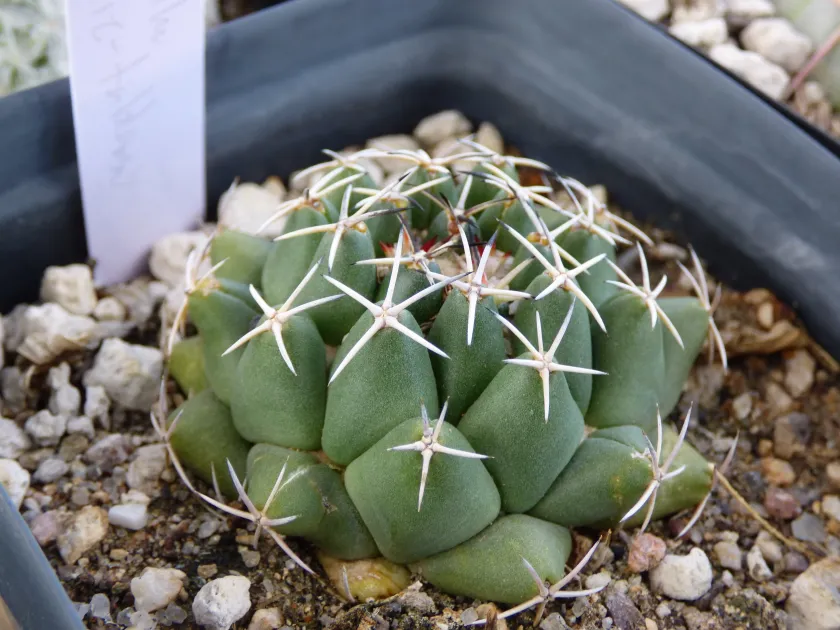
Description
Sowing dates
Seed propagation of Coryphantha maiz-tablasensis is best performed during early spring to maximize the growing season. The ideal germination temperature ranges between 22 and 25 degrees Celsius.
Use a sterile, well-draining mineral substrate consisting of sand and fine peat. Seeds should be sown on the surface and pressed gently into the soil rather than being buried deep.
Cover the container with a plastic sheet to maintain high humidity during the initial germination phase. Daily ventilation is essential to avoid damping-off diseases caused by stagnant air.
Seedlings require bright, indirect light until they develop sufficient protective spines. Only when they have reached the size of a small pea should they be pricked out into individual pots.
Patience is required as this species exhibits a slow initial growth rate. Consistent temperature and moderate light are the most critical factors for successful early development.
Growing requirements
Coryphantha maiz-tablasensis is a unique member of the Cactaceae family, native to the arid regions of San Luis Potosi, Mexico. It thrives in stony soils with very low organic matter content.
The substrate must be extremely porous to ensure rapid drainage. A mix of pumice, coarse sand, and a small amount of potting soil is generally recommended for healthy root development.
Full sun exposure is necessary for the plant to maintain its compact, spherical growth habit. Without intense light, the cactus will lose its aesthetic value and fail to produce its characteristic flowers.
Winter dormancy is vital for the physiological cycle of this plant. During this phase, it should be kept in a cool environment, ideally between 8 and 12 degrees Celsius, and kept completely dry.
During the growing season, water only when the substrate has dried out completely. Always avoid wetting the stem directly to prevent rot, especially during cooler nights.
Main diseases and pests
Root mealybugs are a significant pest that can decimate the root system without immediate visual warning. Regular inspection of the roots during repotting is highly recommended.
Red spider mites frequently attack this species, especially in environments with poor air circulation. They cause visible damage to the epidermis, which can leave permanent scars on the stem.
Fungal rots are the most common cause of death for this cactus, usually triggered by overwatering. A firm, dark-colored stem is a sign of rot that requires immediate surgical intervention.
Improper mineral nutrition can lead to stunted growth and weakened spines. Use specialized cactus fertilizers with very low nitrogen content to avoid bloated, weak tissue growth.
- Root mealybugs.
- Spider mites.
- Root rot.
- Fusarium wilt.
- Stem scarring.