
Reference · Crops
Nightshade
Solanum L.
The genus Solanum (Nightshade) includes essential agricultural crops like potatoes, tomatoes, and eggplants, which are cultivated according to specific biological cycles.
48
items
What the section contains
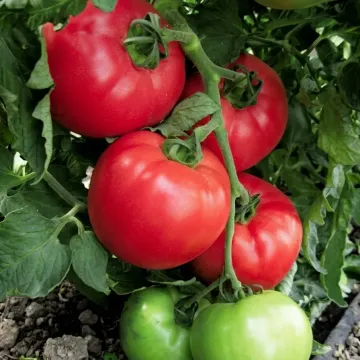
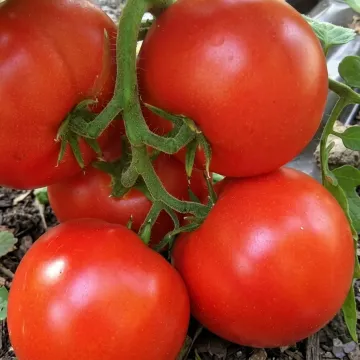
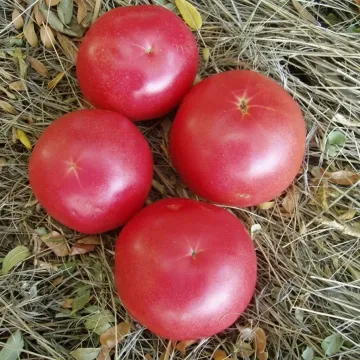
 Tomato
Solanum lycopersicum L.
5 715 products
Tomato
Solanum lycopersicum L.
5 715 products
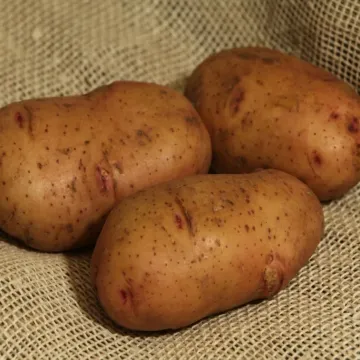
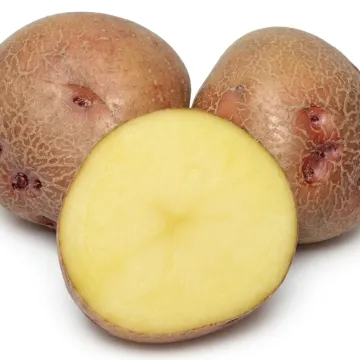
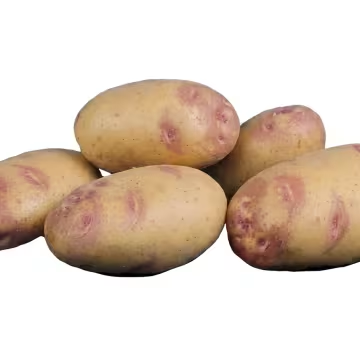
 Potato
Solanum tuberosum L.
2 821 products
Potato
Solanum tuberosum L.
2 821 products
 Eggplant
Solanum melongena L.
514 products
Eggplant
Solanum melongena L.
514 products
 Naranjilla
Solanum quitoense Lam.
1 product
Naranjilla
Solanum quitoense Lam.
1 product
 Bittersweet nightshade
Solanum dulcamara L.
Bittersweet nightshade
Solanum dulcamara L.
 Black nightshade
Solanum nigrum L.
Black nightshade
Solanum nigrum L.
 Buffalo bur nightshade
Solanum rostratum Dunal
Buffalo bur nightshade
Solanum rostratum Dunal
 Carolina horsenettle
Solanum carolinense L.
Carolina horsenettle
Solanum carolinense L.
 Cherry tomato
Solanum lycopersicum L. var. cerasiforme (Alef.) Fosberg
Cherry tomato
Solanum lycopersicum L. var. cerasiforme (Alef.) Fosberg
 Chilean nightshade
Solanum chilense (Dunal) Reiche
Chilean nightshade
Solanum chilense (Dunal) Reiche
 Chilean potato vine
Solanum crispum Ruiz & Pav.
Chilean potato vine
Solanum crispum Ruiz & Pav.
 Cocona
Solanum sessiliflorum Dunal
Cocona
Solanum sessiliflorum Dunal
 Currant tomato
Solanum pimpinellifolium L.
Currant tomato
Solanum pimpinellifolium L.
 Demyanka
Solanum melongena x Solanum torvum
Demyanka
Solanum melongena x Solanum torvum
 Galapagos tomato
Solanum cheesmaniae (L. Ridley) Fosberg
Galapagos tomato
Solanum cheesmaniae (L. Ridley) Fosberg
 Galapagos tomato
Solanum galapagense S.C. Darwin & Peralta
Galapagos Tomato
Solanum lycopersicum L. x Solanum cheesmaniae (L. Ridley) Fosberg
Galapagos tomato
Solanum galapagense S.C. Darwin & Peralta
Galapagos Tomato
Solanum lycopersicum L. x Solanum cheesmaniae (L. Ridley) Fosberg
 Garden Huckleberry
Solanum retroflexum Dunal
Garden Huckleberry
Solanum retroflexum Dunal
 Giant nightshade
Solanum giganteum Jacq.
Giant nightshade
Solanum giganteum Jacq.
 Hybrids of eggplant and African eggplant
hybrids between Solanum melongena L. and Solanum aethiopicum L.
Hybrids of eggplant and African eggplant
hybrids between Solanum melongena L. and Solanum aethiopicum L.
 Hybrids of tomato and Solanum habrochaites
hybrids between Solanum lycopersicum L. and S. habrochaites S. Knapp & D.M. Spooner
Interspecific hybrid Solanum pimpinellifolium x Solanum habrochaites
Solanum pimpinellifolium x Solanum habrochaites
Hybrids of tomato and Solanum habrochaites
hybrids between Solanum lycopersicum L. and S. habrochaites S. Knapp & D.M. Spooner
Interspecific hybrid Solanum pimpinellifolium x Solanum habrochaites
Solanum pimpinellifolium x Solanum habrochaites
 Jerusalem cherry
Solanum pseudocapsicum L.
Jerusalem cherry
Solanum pseudocapsicum L.
 Kangaroo apple
Solanum aviculare G. Forst.
Kangaroo apple
Solanum aviculare G. Forst.
 Kangaroo apple
Solanum laciniatum Aiton
Kangaroo apple
Solanum laciniatum Aiton
 Pepino
Solanum muricatum Aiton
Potato
Solanum tuberosum L. subsp. andigenum (Juz. & Bukasov) Hawkes
Potato
Solanum tuberosum L. subsp. tuberosum
Pepino
Solanum muricatum Aiton
Potato
Solanum tuberosum L. subsp. andigenum (Juz. & Bukasov) Hawkes
Potato
Solanum tuberosum L. subsp. tuberosum
 Potato vine
Solanum laxum Spreng.
Potato vine
Solanum laxum Spreng.
 Silverleaf nightshade
Solanum elaeagnifolium Cav.
Silverleaf nightshade
Solanum elaeagnifolium Cav.
 Solanum aethiopicum
 L.
Solanum aethiopicum
Solanum aethiopicum L.
 Solanum chmielewskii
 (C.M. Rick et al.) D.M. Spooner et al.
Solanum chmielewskii
Solanum chmielewskii (C.M. Rick et al.) D.M. Spooner et al.
 Solanum habrochaites
 S. Knapp & D.M. Spooner
Solanum habrochaites
Solanum habrochaites S. Knapp & D.M. Spooner
 Solanum linnaeanum
 Hepper & P.-M. L. Jaeger
Solanum linnaeanum
Solanum linnaeanum Hepper & P.-M. L. Jaeger
 Solanum mammosum
 L.
Solanum mammosum
Solanum mammosum L.
 Solanum pennellii
 Correll
Solanum pennellii
Solanum pennellii Correll
 Solanum peruvianum
 L.
Solanum peruvianum
Solanum peruvianum L.
 Solanum procumbens
 Lour.
Solanum procumbens
Solanum procumbens Lour.
 Solanum torvum
 Sw.
Solanum torvum
Solanum torvum Sw.
 Solanum virginianum
 L.
Solanum virginianum
Solanum virginianum L.
 Sticky nightshade
Solanum sisymbriifolium Lam.
Sticky nightshade
Solanum sisymbriifolium Lam.
 Tamarillo
Solanum betaceum Cav.
Tomato
Solanum lycopersicum L. x Solanum peruvianum (L.) Mill.
Tomato
Solanum lycopersicum x Solanum pimpinellifolium
Tomato
Solanum lycopersicum L. var. lycopersicum
Tamarillo
Solanum betaceum Cav.
Tomato
Solanum lycopersicum L. x Solanum peruvianum (L.) Mill.
Tomato
Solanum lycopersicum x Solanum pimpinellifolium
Tomato
Solanum lycopersicum L. var. lycopersicum
 Waxy-leaf nightshade
Solanum glaucophyllum Desf.
Waxy-leaf nightshade
Solanum glaucophyllum Desf.
 White-margined nightshade
Solanum marginatum L. f.
White-margined nightshade
Solanum marginatum L. f.
 Woolly nightshade
Solanum mauritianum Scop.
Woolly nightshade
Solanum mauritianum Scop.
Marketplace
Products in this section · 12



Nightshade
For warmth-loving crops such as tomatoes and eggplants, sowing begins in greenhouses 50–70 days before the frost-free date to ensure robust seedlings for transplanting.
Potatoes are planted directly as tubers once soil temperatures reach a consistent +8...+10°C, typically during the spring season depending on the latitude.
Sowing timing is critical; Solanum crops are sensitive to cold snaps and frost, which can cause significant damage to young seedlings and reduce final yield.
Implementing a diverse crop rotation is a fundamental agronomic practice to prevent the build-up of common soil-borne pathogens associated with the Solanaceae family.
Most Solanum crops thrive in well-drained, fertile loamy or sandy soils that maintain a slightly acidic to neutral pH level for optimal nutrient availability.
These plants are photophilic and thermophilic, requiring full sun exposure and ideal daytime temperatures between +20°C and +25°C for maximum photosynthesis.
Water requirements vary throughout the growth cycle, with consistent moisture needed during fruit set, while excess soil saturation must be avoided to prevent root rot.
Effective fertilization regimes focusing on potassium and phosphorus are essential to support flowering and high-quality fruit development in these crops.
Environmental stability is key, as sudden shifts in humidity or extreme temperature fluctuations can induce plant stress and cause premature flower drop.
The yield potential of Solanum crops is highly dependent on cultivar selection, precise agronomic management, and favorable weather conditions during the season.
In high-tech greenhouse operations, tomato yields can exceed 50–100 tons per hectare, while potato yields typically range from 30 to 50 tons per hectare in field production.
Factors influencing final marketable yield include planting density, irrigation efficiency, and the implementation of an integrated pest management (IPM) program.
Effective weed control during the early stages of plant development is crucial for minimizing resource competition and securing the crop's physiological potential.
Modern plant breeding has introduced high-yielding F1 hybrids that offer improved resistance to abiotic stresses and better performance in changing climates.
Major agricultural threats include late blight (Phytophthora infestans), early blight (Alternaria), and various viral pathogens that can cause widespread crop loss.
Pests such as the Colorado potato beetle, aphids, spider mites, and whiteflies pose significant challenges and require diligent monitoring and chemical intervention.
- Late blight — severe fungal disease affecting foliage and fruits.
- Colorado potato beetle — major defoliator impacting plant vigor.
- Tobacco mosaic virus — systemic infection leading to stunted growth.
Disease prevention strategies prioritize the use of resistant cultivars, spatial isolation, and strict sanitation protocols for all agricultural equipment.
Integrated monitoring systems allow agronomists to detect pest pressure early, enabling targeted applications that minimize environmental impact.
Harvest timing is dictated by the crop's intended use, with tomatoes harvested at various maturity stages and potatoes collected after foliage senescence.
Mechanical harvesting is the standard for large-scale production, requiring careful machinery calibration to prevent bruising and long-term storage losses.
Post-harvest handling involves cleaning, grading, and moving produce into climate-controlled storage to maintain quality and shelf life.
Dry weather during harvest is preferred to minimize the risk of decay and to ensure that the produce enters the storage chain in an optimal physiological state.
Maintaining stable temperature and humidity levels during storage is essential to preserving the nutritional quality and marketability of the harvested crop.