
Giant nightshade
Solanum giganteum Jacq.
Description
Growing requirements
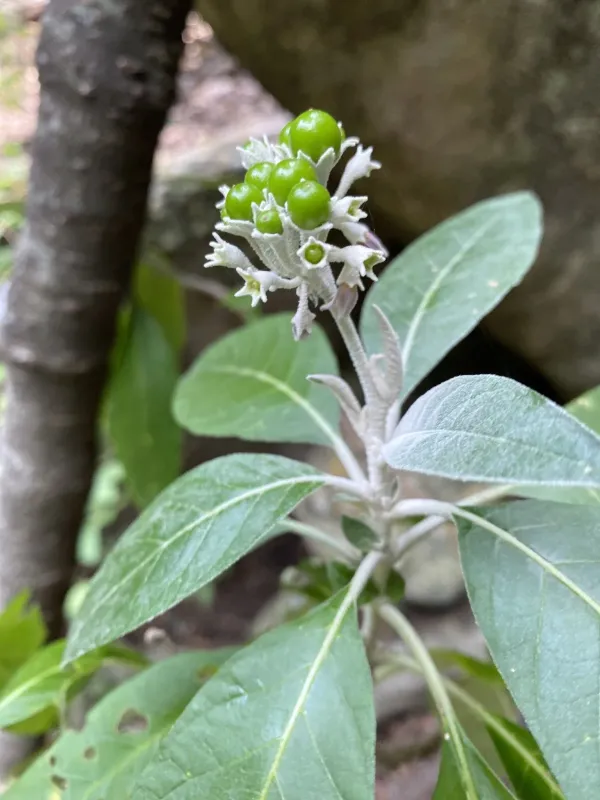
Giant nightshade, scientifically known as Solanum giganteum, is an impressive perennial shrub or small tree belonging to the Solanaceae family. It is distinguished by its large, elliptic leaves with a striking silver-white tomentose underside, which creates a high visual contrast in any setting.
Native to the subtropical regions of Africa and parts of India, this plant thrives in warm climates. It requires full sunlight exposure to maintain its vigorous growth and to support the production of its characteristic bright red fruits and small violet or blue flowers.
Cultivation requirements involve well-draining, fertile soil enriched with organic matter. The plant is sensitive to frost and waterlogging, making proper site selection and soil preparation essential for the longevity of the plant in a landscape or agricultural context.
The agrotechnical approach focuses on maintaining steady soil moisture without creating boggy conditions. Regular feeding with balanced fertilizers during the growing season helps the plant reach its full size and promotes health throughout the peak blooming period.
Beyond its ornamental appeal, the plant is historically significant in traditional medicine. Modern research investigates the alkaloids found in its tissues for potential pharmacological applications, emphasizing the need for controlled cultivation techniques.
Main diseases and pests
The primary pests affecting Solanum giganteum include sap-sucking insects such as aphids, spider mites, and whiteflies, which can quickly dehydrate leaves if the environment becomes too dry or stagnant.
Fungal pathogens often target the plant when drainage is inadequate, leading to root rot or leaf spot diseases. Ensuring proper spacing and airflow between individual plants is the most effective preventative measure against these threats.
Integrated pest management protocols suggest monitoring the leaf undersides regularly and employing biological control agents before resorting to chemical insecticides, especially when the plant is used for research.
Soil-borne diseases such as Fusarium wilt can pose a significant threat if the soil structure remains too compact or damp for prolonged periods, highlighting the importance of using high-quality drainage substrates.
Proper sanitation, including the removal of infested plant debris, is vital to prevent the spread of diseases and pests across the entire planting area, ensuring the continued vitality of the collection.