
Solanum habrochaites
Solanum habrochaites S. Knapp & D.M. Spooner
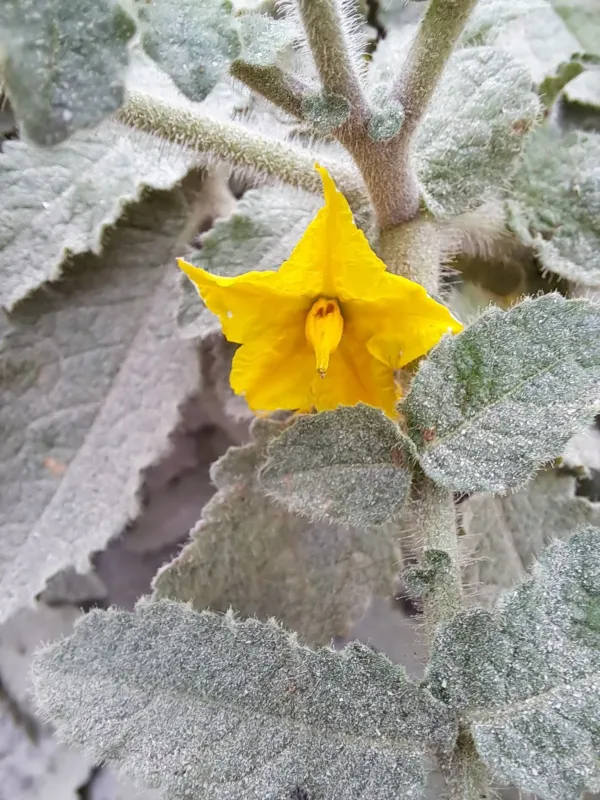
Description
Sowing dates
This plant is a wild species and is not grown on an industrial scale as a standard agricultural crop for commercial fruit production.
Seeds of Solanum habrochaites are typically sown in laboratory or greenhouse settings exclusively for plant breeding and research purposes.
To ensure germination, strict temperature regimes must be maintained, simulating the natural environmental conditions of the Andean foothills.
The use of stratification or growth-promoting treatments is often necessary to overcome the deep dormancy typical of this wild species' seeds.
Sowing is performed in specialized, highly aerated substrates to prevent root system rot during the early stages of plant development.
Growing requirements
Solanum habrochaites belongs to the Solanaceae family and is a perennial herbaceous plant exhibiting a high degree of morphological polymorphism.
In its native habitat, the species grows in Peru and Ecuador, adapting to a wide range of altitudes, from lowland valleys to high mountain regions.
The plant requires high light intensity and prefers well-drained, loamy, or rocky soils with a neutral pH balance.
The species possesses exceptional resistance to abiotic stressors, including rapid temperature fluctuations and low atmospheric humidity.
Due to its high genetic plasticity, this species is extensively used in introgression breeding programs to transfer valuable genes to domestic tomato varieties.
Main diseases and pests
The species features unique defensive mechanisms, particularly the presence of glandular trichomes that secrete specific terpenoids.
These biologically active compounds provide the plant with natural resistance against a wide range of insect pests and fungal pathogens.
Despite its high resistance, when grown in greenhouses, the plant may still be susceptible to common nightshade diseases like late blight or tomato mosaic virus.
When cultivating for research purposes, it is essential to monitor populations of aphids and spider mites, which can act as vectors for various viruses.
The effective protection of this crop is based on its high content of secondary metabolites, making Solanum habrochaites a prized donor of resistance genes.