
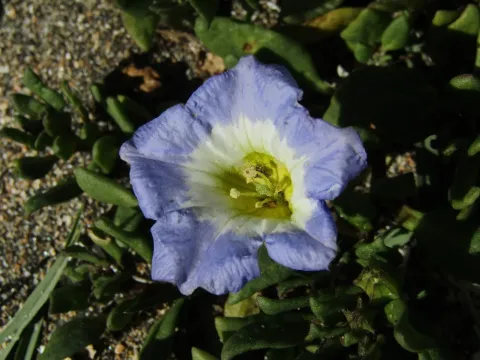
Nolana
Nolana L.
Nolana seeds should be sown outdoors only when the risk of frost has passed, as the plant is highly sensitive to cold temperatures and needs warmth to germinate.
What the section contains

Nolana
In regions with shorter growing seasons, starting seeds indoors 6 to 8 weeks before the last frost date is recommended to ensure earlier and longer flowering periods.
The seeds require light for optimal germination, so they should be sown on the surface or barely covered with a very thin layer of soil or vermiculite.
Maintaining a consistent moisture level in the germination medium is crucial, although it is equally important to avoid waterlogging the soil during the seedling stage.
Transplanting requires extreme care to avoid disturbing the root system, as Nolana plants can be sensitive to root damage and may experience significant transplant shock.
Nolana is a genus of annual and perennial flowering plants belonging to the Solanaceae family, natively distributed in the arid coastal regions of Chile and Peru.
Botanically, these plants are known for their fleshy leaves and bell-shaped flowers, which often resemble those of morning glories, making them popular for ornamental use.
The culture thrives in sandy, well-draining soils and is remarkably adapted to rocky, salt-rich environments where other plants might struggle to survive.
High sunlight exposure is a primary requirement; without sufficient light, the plant stems become leggy, and flowering is significantly reduced or inhibited entirely.
While Nolana is drought-tolerant, regular and moderate irrigation during the active growing season helps maintain a lush appearance and continuous production of blooms.
The most significant threat to the health of Nolana is overwatering, which quickly leads to root rot and other fungal pathogens that compromise the entire plant structure.
Poor ventilation and high humidity can invite powdery mildew, which manifests as a white, dusty coating on the foliage and requires prompt removal or treatment.
Aphids are the most common pests that affect Nolana, typically clustering on young buds and succulent stems, causing deformation and growth stuntedness.
Spider mites may also pose a challenge during prolonged periods of hot and dry weather, necessitating periodic inspections of the leaf undersides.
Effective management involves preventive spacing to ensure airflow and the use of integrated pest management strategies to keep the ornamental display healthy.