
Sticky nightshade
Solanum sisymbriifolium Lam.
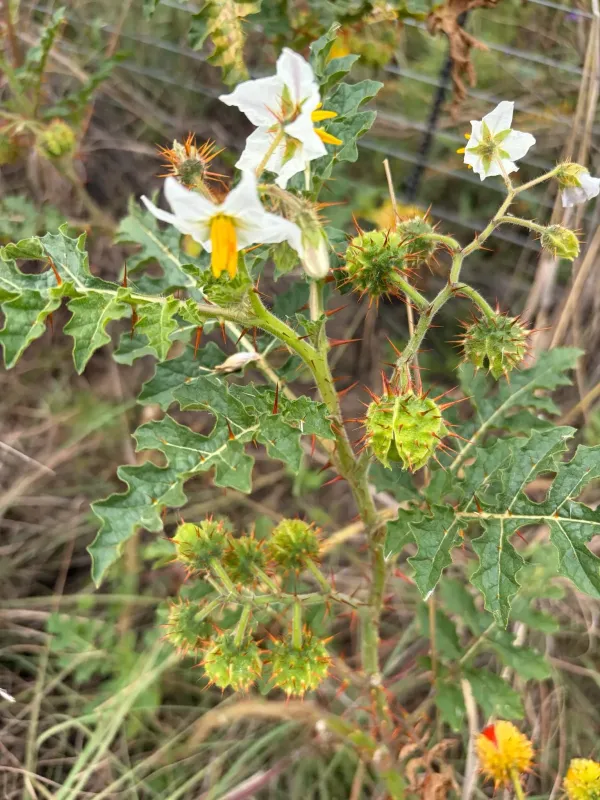
Description
Sowing dates
Sticky nightshade (Solanum sisymbriifolium) is a herbaceous plant belonging to the Solanaceae family. Seeds are typically sown in open fields once the risk of frost has passed and the soil temperatures have increased sufficiently.
For early season starts, the crop can be propagated in greenhouses or protected beds. Seeds should be sown approximately 6 to 8 weeks before the intended transplanting date to ensure a robust initial growth phase.
The germination energy of the seeds is generally high, provided that the seedbed is well-prepared and free from competing weeds. Seedlings are delicate during their early stage and require protection from competition.
Optimal planting depth ranges between 1 and 2 centimeters. Consistent soil moisture is required during the germination phase to ensure a uniform emergence of seedlings across the field.
Planting density varies based on the intended use; higher density is often employed when the crop is grown specifically for nematode suppression or soil enrichment purposes.
Growing requirements
Originating from South America, the Sticky nightshade is a heat-loving and sun-demanding plant. It thrives in temperate conditions that provide long, sunny days throughout the growing cycle.
It adapts to various soil types but performs best in well-drained sandy or loamy soils. It prefers soils with a neutral to slightly acidic pH level for optimal nutrient availability.
This crop is highly drought-tolerant due to its deep taproot system, which allows it to access water reserves in lower soil layers. However, regular irrigation during peak growth phases significantly enhances biomass yield.
Growth is most effective within a temperature range of +20°C to +30°C. Development slows down considerably below +15°C, and exposure to frost will damage the vegetative parts of the plant.
The plant's resilience makes it an excellent choice for planting on marginal or degraded soils, as it helps in soil conditioning while requiring minimal input compared to traditional horticultural crops.
Main diseases and pests
The Sticky nightshade is highly valued in agriculture for its natural resistance to many common potato pests and pathogens, making it an excellent break crop in traditional potato rotations.
The plant produces specific alkaloids, such as solasodine, which serve as natural biofumigants, suppressing soil-borne pests like plant-parasitic nematodes effectively.
While resistant to many insects, the crop can occasionally be susceptible to fungal diseases like late blight, especially in areas with high humidity and poor air circulation among the plants.
Integrated pest management strategies focusing on good field hygiene and proper plant spacing are usually sufficient to mitigate most disease risks associated with this nightshade species.
- Crop rotation management
- Adequate air circulation
- Early detection of leaf spots
Harvesting
When grown for phytosanitary purposes, the biomass should be harvested or incorporated into the soil before the fruit reaches full maturity to prevent the plant from self-seeding.
For pharmaceutical applications, where the plant is valued for its alkaloid content, fruits are harvested during the technical maturity phase, ensuring the highest concentration of desired compounds.
Harvesting can be mechanized using standard forage equipment if the crop is grown in high-density swards intended for green manure application and soil remediation.
After the harvest, the remaining crop residues can be incorporated into the soil. This practice not only adds organic matter but also maximizes the release of active substances that suppress harmful soil organisms.
Effective harvest timing is crucial to balance the benefit of soil disinfection with the need to maintain control over the plant's spread in the following growing seasons.