
Buffalo bur nightshade
Solanum rostratum Dunal
Description
Growing requirements
Buffalo bur nightshade is an annual herb belonging to the Solanaceae family. It is native to the southwestern United States and Mexico, but it has become an invasive weed in many agricultural regions globally.
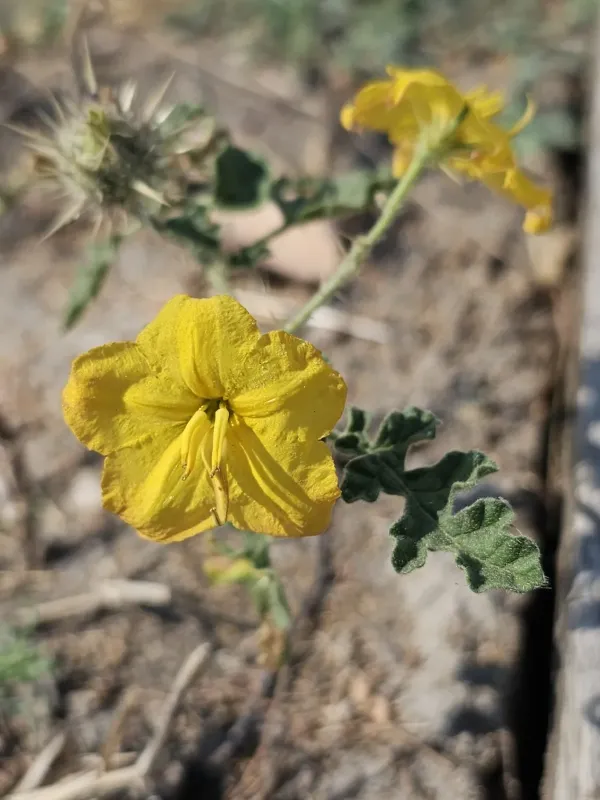
The plant is easily recognized by its coarse stems covered in sharp, yellow, needle-like spines. The leaves are deeply lobed and also possess spines, which makes the plant highly resistant to herbivory.
It thrives in open, disturbed habitats such as pastures, roadsides, and cultivated fields. It prefers well-drained soils and high-intensity sunlight, showing high tolerance for drought conditions.
There are no agricultural practices involving the intentional cultivation of this species, as it is strictly managed as a noxious weed that outcompetes crops for water, nutrients, and space.
The presence of this plant in agricultural systems is a sign of poor field management, as it aggressively colonizes fallow land and thin crop stands.
Main diseases and pests
Buffalo bur is known to be a major host for the Colorado potato beetle, providing a critical food source that sustains pest populations throughout the growing season.
Due to its spiny nature, the plant can cause physical injury to livestock and agricultural workers, making it difficult to harvest crops in heavily infested areas.
Control measures typically include a combination of mechanical cultivation, especially before the plant sets seeds, and the application of targeted post-emergence herbicides.
Effective management requires long-term monitoring, as the seeds of the plant can remain viable in the soil seed bank for several years after the initial infestation.
Integrated pest management (IPM) strategies are recommended to reduce the prevalence of the weed, focusing on soil cultivation and herbicide rotation to prevent resistance.