
Nicotiana trigonophylla
Nicotiana trigonophylla
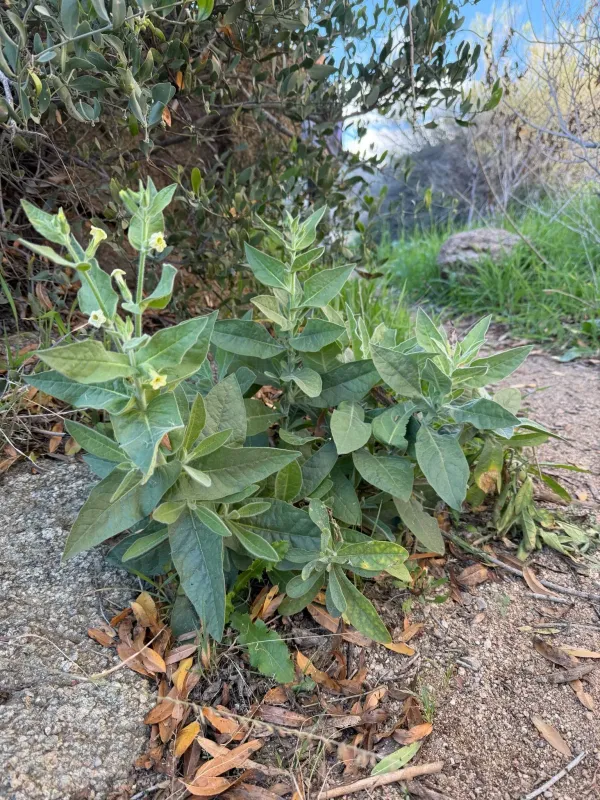
Description
Growing requirements
Nicotiana trigonophylla, commonly referred to as desert tobacco, is a herbaceous plant belonging to the Solanaceae family. As a native of the arid southwestern United States and northern Mexico, it is highly adapted to survive in environments where water is scarce and temperatures are extreme.
The plant typically grows in sandy or rocky soils, often inhabiting washes, canyon slopes, and desert scrub communities. It thrives in full sunlight and exhibits remarkable tolerance to heat, which is a key physiological trait for its survival in desert biomes.
Botanically, this species is distinguished by its pubescent leaves, which help reduce transpiration and maintain moisture balance. The plant usually grows as an annual or biennial, producing upright stems with characteristic petiolate leaves that narrow toward the base, hence the name trigonophylla.
Climate requirements for this plant focus on high light intensity and low atmospheric humidity. While it does not require significant irrigation, it is essential that the soil possesses excellent drainage properties, as the roots are highly susceptible to rot if water persists around the root zone.
In terms of agricultural interest, this plant is primarily studied for its genetic potential regarding drought resistance. It is not currently a mass-market commercial crop, but its resilience provides valuable insights for breeding more sustainable varieties of related solanaceous species.
Main diseases and pests
Like many species within the Nicotiana genus, this plant is susceptible to typical solanaceous diseases, particularly those affecting the root system. Overwatering or poor drainage often leads to Phytophthora or Pythium infections, which can be devastating to the plant's health.
Common insect pests include aphids and whiteflies, which are notorious for transmitting viruses. These vectors can introduce pathogens that inhibit growth and reduce the overall vigor of the plant, often leading to chlorosis and stunted development.
Leaf-eating insects, such as cutworms and hornworms, may also pose a threat during the seedling stage. However, the plant's natural production of nicotine and other alkaloids often acts as a robust chemical defense mechanism, deterring many generalist herbivores.
Viral infections, specifically Tobacco Mosaic Virus (TMV), are a primary concern for any cultivation efforts. Maintaining strict hygiene, including sanitizing tools and ensuring proper spatial separation from commercial tobacco or vegetable crops, is the most effective prevention strategy.
Integrated pest management (IPM) practices are recommended to maintain plant health. This includes monitoring for early signs of infestation and using biological control agents, such as beneficial predatory insects, to suppress pest populations without heavy reliance on synthetic pesticides.