
Tamarillo
Solanum betaceum Cav.
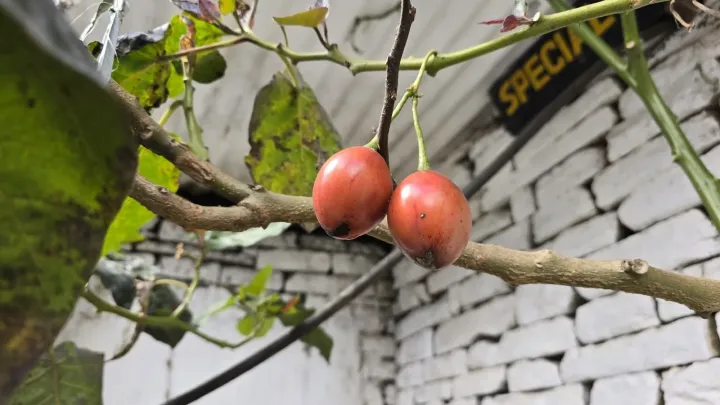
Description
Sowing dates
Tamarillo is primarily propagated through seeds or stem cuttings. Seeds should be sown in a light, well-draining potting mix, maintaining a temperature of approximately 20–25 degrees Celsius for optimal germination.
Seedlings usually emerge within two to three weeks and require careful handling to avoid damaging the delicate root system during the initial stages of growth.
Cuttings are highly favored for commercial production as they result in shorter, more robust plants that begin bearing fruit much earlier than seed-grown specimens.
When transplanting young tamarillo plants, it is crucial to select a location with minimal wind exposure, as the wood is somewhat brittle and prone to breakage.
Proper hardening-off procedures, involving gradual exposure to outdoor elements, are essential for successful establishment after transplanting into the ground.
Growing requirements
Tamarillo, taxonomically known as Solanum betaceum, is a fast-growing, semi-woody shrub belonging to the Solanaceae family, native to the Andean regions.
This crop thrives in fertile, loamy soils with excellent drainage. Waterlogging is the most common cause of crop failure, as it quickly induces root rot and stunted growth.
While the tree prefers full sun, it benefits from light shade in extremely hot climates to prevent leaf scorch and excessive transpiration during peak summer months.
The ideal temperature range for active growth is between 15 and 25 degrees Celsius. The plant is frost-tender and requires protection or indoor storage in cooler climates.
Regular fertilization with balanced NPK formulas is necessary to support the plant's rapid growth rate and continuous fruit production throughout the growing season.
Yield
The first harvest typically occurs within 18 to 24 months after planting cuttings, while seed-grown trees may take an additional year to reach maturity.
The fruit is an oval berry, varying in color from bright yellow to deep red or purple, and is highly valued for its unique sweet-tart flavor profile.
Under optimal agronomic conditions, a mature tamarillo tree can produce between 15 to 20 kilograms of fruit per season, depending on the specific cultivar.
Commercial harvesting is carried out manually as the fruits change color, ensuring they are picked while still firm to facilitate safe storage and transportation.
The fruit is extremely versatile in culinary applications, being widely used in fresh salads, jams, desserts, and as a key component in gourmet savory sauces.
Main diseases and pests
Common pests affecting tamarillo include aphids, whiteflies, and spider mites, which can proliferate rapidly in greenhouses or areas with poor air circulation.
Fungal pathogens such as powdery mildew and Phytophthora are the primary disease threats, often triggered by excessive soil moisture and high atmospheric humidity.
Integrated Pest Management (IPM) practices, such as biological control and spacing for proper aeration, are highly recommended to minimize the reliance on chemical inputs.
Root-knot nematodes can also be a significant issue in certain soil types, necessitating the use of disease-free rootstocks or crop rotation in established orchards.
- Regular inspection of leaf undersides for signs of early pest infestation.
- Pruning to maintain a structure that allows adequate sunlight and airflow.
- Applying mulch to maintain soil moisture while avoiding contact with the trunk.
Harvesting
Harvesting should be performed when the fruit has fully developed its characteristic color, signaling peak maturity and optimal sugar content for consumption.
The fruit should be clipped from the tree with a clean tool to prevent physical tearing of the branches, which could expose the plant to pathogens.
Post-harvest care involves keeping the fruit in a cool, dry place. Tamarillo has a relatively good shelf life, lasting up to two weeks if kept at stable temperatures.
Avoid stacking too many fruits in one container to prevent bruising of the soft outer skin, which significantly lowers the market value of the produce.
For processing purposes, fruits can be harvested slightly earlier, as they continue to ripen post-harvest if kept at room temperature away from direct sunlight.