
Reference · Crops
Phlox
Phlox L.
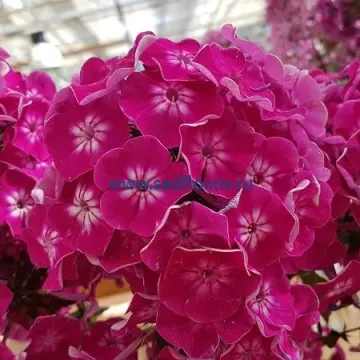
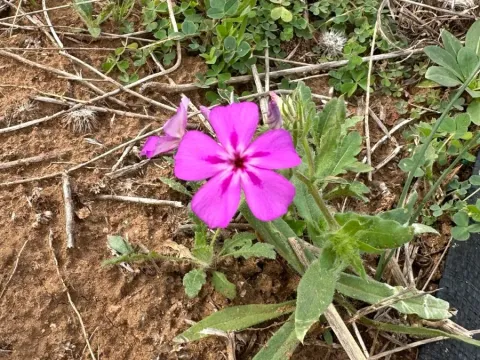
Phlox (Phlox L.) is a diverse genus of plants in the Polemoniaceae family, comprising both annual and perennial species popular in horticulture for their vibrant blooms.
19
items
What the section contains
 Broad-leaved phlox
Phlox amplifolia Britton
Broad-leaved phlox
Phlox amplifolia Britton
 Carolina phlox
Phlox carolina L.
Carolina phlox and spotted phlox
Phlox carolina x Phlox maculata
Carolina phlox
Phlox carolina L.
Carolina phlox and spotted phlox
Phlox carolina x Phlox maculata
 Cleft phlox
Phlox bifida L. C. Beck
Cleft phlox
Phlox bifida L. C. Beck
 Creeping phlox
Phlox stolonifera Sims
Creeping phlox
Phlox stolonifera Sims
 Creeping phlox
Phlox subulata L.
Creeping phlox
Phlox subulata L.
 Douglas phlox
Phlox douglasii Hook.
Douglas phlox
Phlox douglasii Hook.
 Drummond phlox
Phlox drummondii Hook.
Drummond phlox
Phlox drummondii Hook.
 Garden phlox
Phlox paniculata L.
Garden phlox
Phlox paniculata L.
 Kelsey's phlox
Phlox kelseyi Britton
Kelsey's phlox
Phlox kelseyi Britton
 Lilac phlox
Phlox x lilacina hort. ex Wherry
Lilac phlox
Phlox x lilacina hort. ex Wherry
 Meadow phlox
Phlox maculata L.
Phlox kelseyi hybrid
Phlox subulata L. x Phlox kelseyi Britton
Meadow phlox
Phlox maculata L.
Phlox kelseyi hybrid
Phlox subulata L. x Phlox kelseyi Britton
 Richardson's cleft phlox
Phlox richardsonii Hook. subsp. borealis (Wherry) Locklear x Phlox bifida L. C. Beck
Richardson's cleft phlox
Phlox richardsonii Hook. subsp. borealis (Wherry) Locklear x Phlox bifida L. C. Beck
 Richardson's hybrid phlox
Phlox richardsonii Hook. x Phlox bifida L. C. Beck
Richardson's phlox
Phlox richardsonii Hook.
Richardson's phlox
Phlox richardsonii Hook. subsp. borealis (Wherry) Locklear
Richardson's hybrid phlox
Phlox richardsonii Hook. x Phlox bifida L. C. Beck
Richardson's phlox
Phlox richardsonii Hook.
Richardson's phlox
Phlox richardsonii Hook. subsp. borealis (Wherry) Locklear
 Wild blue phlox
Phlox divaricata L.
Wild blue phlox
Phlox divaricata L.
 Wild blue phlox
Phlox x procumbens Lehm.
Wild blue phlox
Phlox x procumbens Lehm.
Marketplace
Products in this section · 12


TARAS SHEVCHENKO
CENTRAL REPUBLICAN BOTANICAL GARDEN OF UKRAINE
Phlox
0
0
1 offer
3.74 €per pack
Buy


Phlox
Annual phlox are typically started from seeds sown in early spring, either directly into the garden soil once the frost has passed or in seed trays for transplanting.
Perennial species are most reliably propagated through division of the root clumps or by taking stem cuttings, which ensures the consistency of the variety's characteristics.
When starting from seed, perennial phlox often requires a period of cold stratification for several weeks to break dormancy and ensure uniform germination across the tray.
Seeds should be covered lightly with a fine, moist potting mix and kept at a temperature of approximately 15–20 °C until the first true leaves appear, followed by a move to a bright, cooler spot.
Phlox plants thrive in well-drained, nutrient-rich soil with a neutral to slightly acidic pH. They perform best in positions that receive at least six hours of direct sunlight.
Adequate moisture is essential, especially during the peak of the growing season. Drip irrigation or careful base watering helps keep foliage dry, which is critical for disease management.
Regular fertilization with balanced NPK formulas supports vigorous vegetative growth and prolific flowering throughout the summer and early autumn months.
Space the plants adequately to allow for good airflow, which is a fundamental requirement for minimizing the risk of fungal outbreaks within the foliage canopy.
In regions with harsh winters, applying a layer of organic mulch around the base of the plant protects the root system from freezing and thawing cycles during the dormant period.
Powdery mildew is the most prevalent issue for phlox, appearing as a white, dusty layer on leaves. It is managed by improving air circulation and applying fungicides as needed.
Stem nematodes can severely stunt growth and cause leaf distortion. Once infected, plants are often difficult to save and should be removed and destroyed to prevent spreading.
Aphids and spider mites are common insect threats. Regular scouting allows for early intervention with insecticidal soaps or specific miticides before the infestation becomes severe.
Leaf spot diseases, caused by various pathogens, can occur in damp, humid conditions. Preventive measures include maintaining garden hygiene and avoiding overhead watering.
Choosing resistant cultivars is the primary and most effective line of defense against many of the common biological threats affecting phlox cultivation in the field.
Phlox is primarily harvested as a high-value ornamental cut flower. Stems are cut when approximately half of the florets on the panicle are open for the longest vase life.
Seeds for propagation are harvested when the pods begin to dry and change color to brown, requiring careful monitoring to prevent premature scattering of the seeds.
For commercial landscape supply, rootstock division is harvested in the dormant season, sorted by quality, and prepared for storage or immediate distribution to nurseries.
At the end of the season, the foliage is cut back to ground level, which tidies the garden and helps manage the build-up of overwintering pathogens in the plant debris.
Professional management of phlox harvests, particularly in specialized flower farms, focuses on post-harvest hydration and cold storage to maintain quality for export and local markets.