
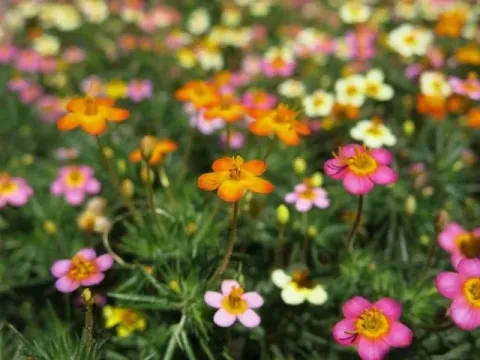
Leptosiphon
Leptosiphon
Sowing Leptosiphon seeds in open ground is carried out in spring, once the soil has warmed sufficiently, typically in April or early May. For earlier flowering, a seedling method is possible: sow seeds in containers in March, without burying them deep, merely covering them with a light layer of substrate or sand.
What the section contains

Leptosiphon
Leptosiphon seedlings emerge unevenly, so it is vital to maintain stable moisture on the soil surface until germination occurs. Pricking out seedlings should be done with extreme caution, as the plant's root system is sensitive to damage, which can significantly retard growth.
When sowing directly into the permanent site, a spacing of 15–20 centimeters between plants is recommended. This allows for adequate air circulation, which is critical for preventing the development of fungal diseases in dense plantings.
Leptosiphon seeds are quite small; therefore, it is advisable to mix them with dry sand before sowing to ensure an even distribution across the flower bed. The soil surface should be lightly compacted after sowing to improve seed-to-soil contact.
Thinning the seedlings is an essential stage if the sowing was done too densely. Proper spacing encourages the development of more vigorous and profusely flowering specimens, which directly enhances the aesthetic appeal of the flower bed.
Leptosiphon is a light-loving plant belonging to the Polemoniaceae family, which thrives best in open, well-lit areas. A lack of sunlight leads to elongated stems and a significant decrease in the intensity of flowering.
The crop has moderate soil requirements, preferring light, well-drained, sandy or loamy soils. The plant reacts extremely negatively to waterlogging, which can quickly lead to root rot at the root collar.
During the active growth period, Leptosiphon requires moderate watering. Despite some drought tolerance, regular moisture during hot periods helps maintain foliage health and extends the flowering period until late summer.
The plant demonstrates good resistance to temperature fluctuations in spring, allowing for relatively early planting. However, the optimal temperature range for normal development is 18–22 degrees Celsius.
Fertilizer application should be moderate. An excess of nitrogen-based fertilizers stimulates excessive foliage growth at the expense of flowers, so it is better to use complex mineral compositions intended for flowering plants with low nitrogen content.
The main threat to Leptosiphon when agricultural practices are neglected is root rot, caused by excessive soil moisture or heavy soil texture. Prevention consists of ensuring high-quality drainage systems.
In conditions of dense planting and high air humidity, plants may be affected by powdery mildew. Combating this disease involves the use of broad-spectrum fungicides and the removal of heavily affected plant specimens.
Among pests, aphids represent the greatest danger to Leptosiphon, as they suck juices from young shoots and buds. Regular inspection allows for the timely identification of pest colonies and the application of appropriate insecticides.
Spider mites may appear in hot, dry air conditions, attacking the leaves. To prevent mite infestation, it is necessary to maintain optimal air humidity and avoid the drying out of the root ball.
As a preventive measure for all aforementioned issues, it is recommended to practice crop rotation and timely weeding, as weeds can serve as intermediate hosts for many harmful insect species and fungal spores.