
Richardson's phlox
Phlox richardsonii Hook. subsp. borealis (Wherry) Locklear
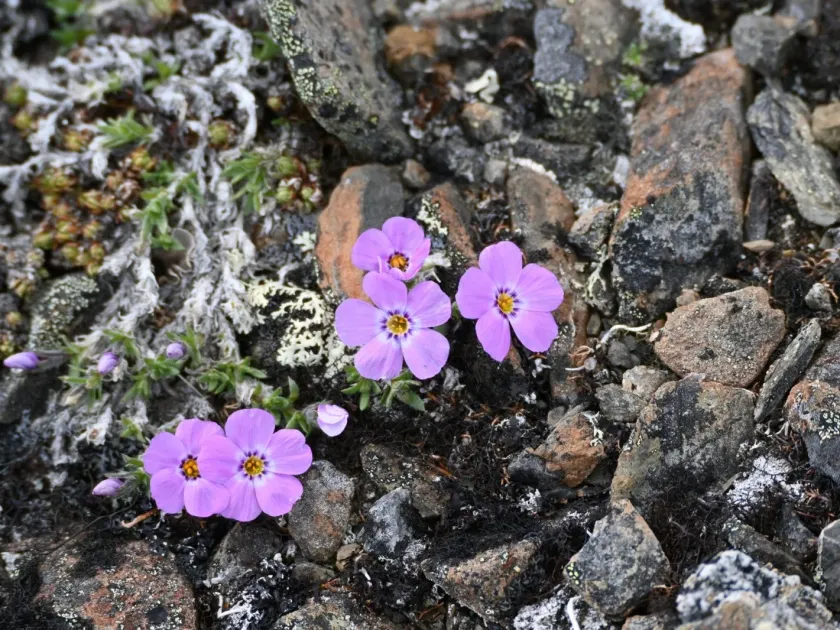
Description
Sowing dates
Propagation of Richardson's phlox is typically achieved through division of established clumps or by taking softwood cuttings during the early growing season.
Seed propagation requires a cold stratification period to break dormancy, reflecting the plant's natural adaptation to high-latitude environments.
When transplanting young specimens, it is crucial to ensure the root system is well-established before the onset of extreme seasonal temperatures.
For direct seeding in outdoor settings, late autumn sowing is recommended to allow the seeds to undergo natural winter cycles in the soil.
Providing adequate spacing during planting ensures that the ground-hugging habit of the phlox can develop without competition from invasive weeds.
Growing requirements
Richardson's phlox is a member of the Polemoniaceae family, evolved to thrive in tundra and arctic-alpine conditions with low-growing, mat-forming traits.
The species demands well-drained, gritty soil that prevents moisture accumulation around the crown, which is vital for survival during the wet seasons.
Full sun is generally preferred, although in warmer climates, afternoon shade is essential to protect the delicate foliage from heat stress.
Climate requirements include a cool, temperate environment; the plant is exceptionally hardy but dislikes the rapid thawing-freezing cycles of temperate winters.
Maintenance of moderate soil moisture levels is necessary throughout the growing period, supplemented by rock mulching to keep the root zone cool.
Main diseases and pests
Powdery mildew is the most common fungal issue, often triggered by poor air circulation and high humidity levels surrounding the plants.
Root rot remains a primary concern in cultivation, usually caused by heavy, water-logged soils that do not allow for sufficient oxygen flow.
Garden pests such as slugs and snails are highly attracted to the succulent-like foliage, often requiring active monitoring during moist weather.
Nematode infestations can damage the root system, leading to stunted growth and a general decline in the plant's health over time.
- Ensure optimal drainage for the site.
- Provide adequate spacing for airflow.
- Use gravel mulch to protect the crown.
- Regularly inspect foliage for signs of pests.