
Richardson's phlox
Phlox richardsonii Hook.
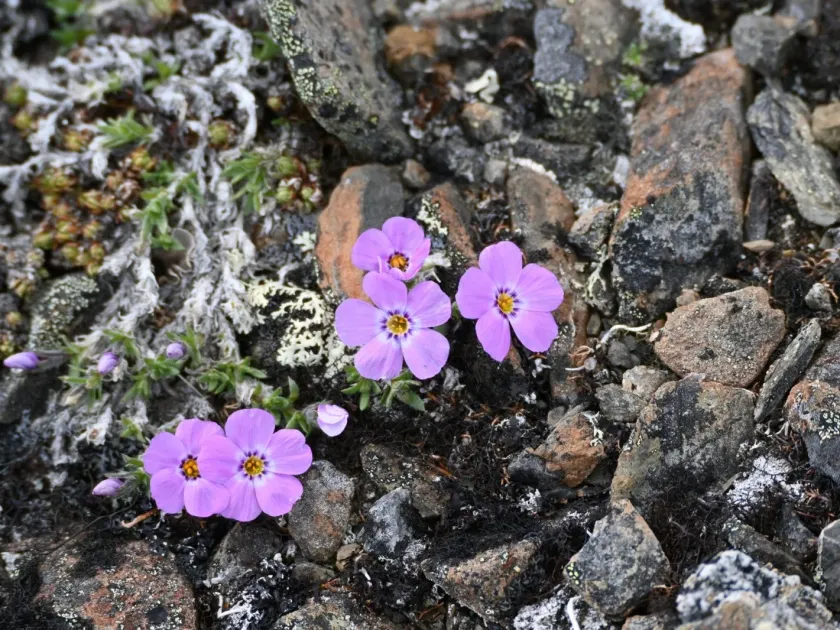
Description
Growing requirements
Richardson's phlox (Phlox richardsonii Hook.) is a low-growing perennial herbaceous plant belonging to the Polemoniaceae family. In the wild, this species is primarily found in the harsh climatic conditions of the Arctic regions of North America, including Alaska and northern Canada.
The crop is characterized by a compact, cushion-like growth habit and is well-adapted to tundra conditions and high-altitude rocky plateaus. Its stems are densely covered with leaves, and the plant rarely exceeds 5–10 centimeters in height, making it an excellent choice for alpine gardens and rockeries.
Successful cultivation requires well-drained, moderately fertile soil with a neutral to slightly acidic pH. The plant is extremely sensitive to waterlogging; therefore, establishing high-quality drainage is a critical factor in preventing root rot diseases.
This crop is heliophilic and prefers open, well-lit sites protected from stagnant cold air. It exhibits high frost resistance, typical of Arctic native species, and successfully survives harsh winter periods with extremely low temperatures.
Economic use is limited to ornamental horticulture, where Richardson's phlox is valued for its early flowering and its ability to form dense, mat-like carpets. It is ideal for specialist rock gardening and landscaping in regions with cool summers.
Main diseases and pests
The primary biological threats to the plant are fungal infections that occur due to improper cultivation practices, specifically excessive soil moisture or poor air circulation within the foliage.
The root system may suffer from rot in the absence of adequate drainage, which often leads to the rapid death of the plant during the summer months.
Under greenhouse or protected conditions, the crop may be susceptible to minor pests such as spider mites or nematodes, which require timely treatment with fungicides and acaricides.
Incorrect soil pH management often induces leaf chlorosis, causing the plant to lose its decorative value and slowing its vegetative growth rates.
It is necessary to strictly control planting density, as overcrowding promotes the development of powdery mildew, especially during periods of high ambient humidity.