
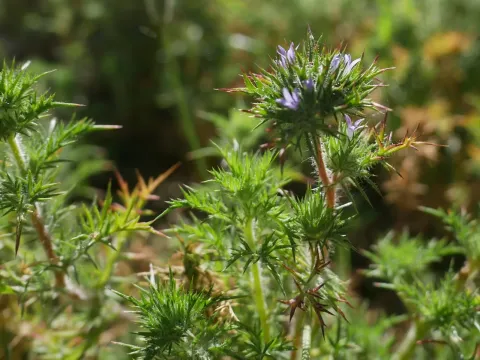
Navarretia
Navarretia
Navarretia is typically sown directly into the soil because its taproot system makes it highly intolerant to transplanting. The ideal time for sowing is in mid-spring, once the danger of late frost has passed and the ground begins to warm up significantly.
What the section contains

Navarretia
Seeds should be covered with a very light layer of soil, no more than 0.5–1 cm deep. Maintaining consistent moisture in the topsoil for the first two weeks is crucial for uniform germination, as seeds can be sensitive to drying out during the critical sprouting phase.
In regions with milder climates, late autumn sowing is an option, allowing seeds to germinate early in the spring. This practice often results in more robust plants that flower earlier than those planted during the standard spring window.
Before sowing, it is advisable to ensure good seed viability. Using high-quality, fresh seeds significantly improves the germination rate. It is also recommended to space plants roughly 20–25 cm apart to allow for proper airflow once the seedlings mature.
Thinning out dense seedlings is an essential step in maintaining a healthy crop. Overcrowding not only competes for nutrients but also promotes humidity levels around the foliage, which can increase the risk of disease in susceptible environments.
A member of the Polemoniaceae family, Navarretia is native to arid regions of North America, which dictates its preference for full sun exposure. The plant requires at least 6–8 hours of direct sunlight per day to develop fully and produce an abundance of flowers.
Well-draining, sandy, or gravelly soils are mandatory for this crop. Navarretia thrives in poor-to-average soil fertility and does not perform well in heavy, moisture-retentive clays, which often lead to root rot and other fatal physiological disorders.
The plant is highly drought-tolerant once established. While it needs occasional watering during the initial growth phase, it should be kept on the drier side once the blooming stage begins, as excessive soil moisture can hinder flowering performance.
Soil pH should remain near neutral or slightly acidic for optimal nutrient uptake. Avoid using high-nitrogen fertilizers, as they encourage excessive vegetative growth that weakens the plant structure and reduces the intensity and duration of the bloom.
Temperature-wise, Navarretia prefers moderate to warm conditions with low humidity. It is an ideal candidate for rock gardens or arid landscapes where other more demanding plants might fail due to environmental stress or water scarcity.
The primary threat to Navarretia is root rot, almost always associated with improper irrigation or poor drainage. Excess water around the roots creates a perfect breeding ground for pathogens that can destroy the root system very rapidly.
Powdery mildew is a common foliage disease, especially in areas with poor circulation or sudden fluctuations in humidity. It appears as a white, dusty layer on the leaves, which can eventually stunt the plant's growth and reduce its overall vitality.
Spider mites can become a nuisance during hot, dry spells. These pests colonize the undersides of the leaves, drawing out moisture and causing the foliage to appear yellowed or speckled before drying out and dropping off prematurely.
Aphids occasionally target new, tender growth and flower buds. Infestations can cause deformed blooms and stunted development, requiring prompt intervention with either physical removal or suitable organic insecticidal soaps if the population becomes large.
Proactive management of the planting site is the best defense against threats. Ensuring proper spacing for air circulation and strictly monitoring soil drainage will significantly reduce the risk of both pest outbreaks and fungal infections.