
Richardson's cleft phlox
Phlox richardsonii Hook. subsp. borealis (Wherry) Locklear x Phlox bifida L. C. Beck
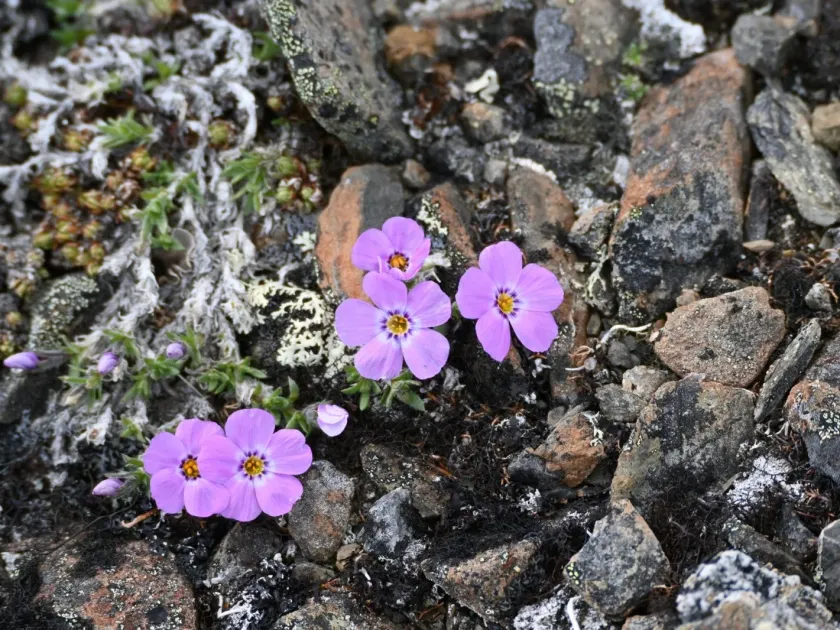
Description
Growing requirements
Richardson's cleft phlox is an intricate hybrid belonging to the Polemoniaceae family. It is a perennial plant characterized by its hardiness and ability to thrive in challenging environmental conditions, forming dense mats of foliage.
The cultivation of this plant requires full sun exposure to ensure robust growth and prolific flowering. It is essential to select sites with excellent drainage, as the species is highly sensitive to root rot caused by stagnant water.
Soil requirements focus on light, well-draining textures such as sandy or rocky soils with neutral to slightly alkaline pH. Enriching the soil with coarse sand or gravel improves aeration, which is vital for this alpine-type plant.
Climatic conditions for this hybrid must include cold winters and relatively dry summers. It is well-adapted to cooler regions where the dormant season is clearly defined, allowing the plant to restore its energy reserves.
Economically, this phlox is utilized primarily in ornamental horticulture. Its compact habit makes it an ideal candidate for rock gardens, borders, and ground cover applications in landscapes with poor soil quality where other species struggle.
Main diseases and pests
Powdery mildew is the most common fungal disease, typically occurring during periods of high humidity and poor air circulation. It manifests as a white dusty coating on the leaves and stems, significantly reducing the plant's health.
Root rot, driven by excessive moisture and heavy, poorly drained soil, poses a lethal threat to the plant. Preventing waterlogging is the most effective management strategy to maintain healthy root systems.
Spider mites are prevalent pests that thrive in hot, dry weather. They cause yellowing and stippling of the foliage, which can eventually lead to leaf drop if left untreated.
Slugs and snails can cause significant damage to young shoots in early spring. Barrier methods and targeted molluscicides are recommended to protect the growth during the early stages of development.
Regular maintenance, including the removal of dead or decaying foliage and proper spacing, is crucial for preventing pest and disease outbreaks. Preventive care remains the cornerstone of phlox cultivation.