
Creeping phlox
Phlox stolonifera Sims
Description
Growing requirements
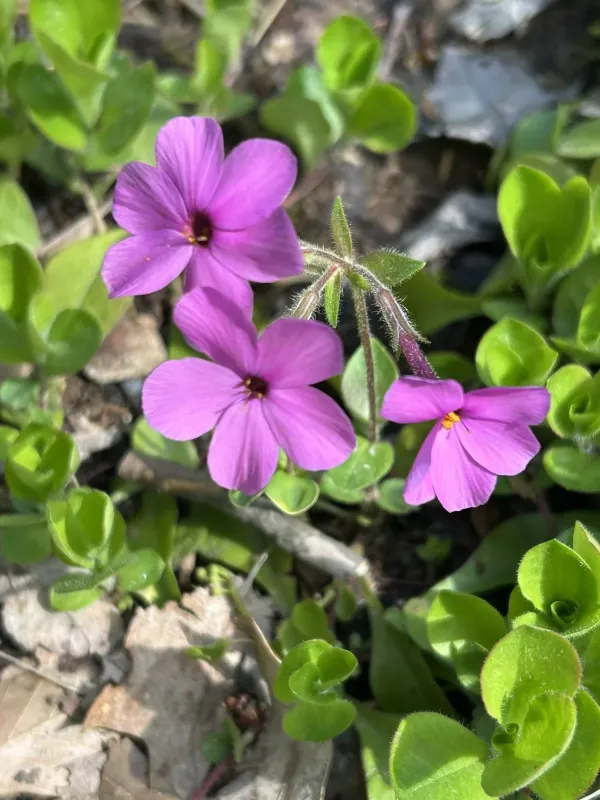
Creeping phlox (Phlox stolonifera Sims) is a herbaceous perennial belonging to the Polemoniaceae family. It is native to the Appalachian region of North America. The plant is botanically characterized by its stoloniferous habit, meaning it spreads via underground or surface stems that root at the nodes, creating a dense, mat-forming ground cover about 8–10 inches in height.
Regarding cultivation requirements, the plant prefers moist, well-drained soils rich in organic matter. While it is tolerant of various soil types, it performs best in humus-rich, acidic to neutral soil. Unlike its sun-loving relatives, this species thrives in partial to full shade, making it an excellent choice for woodland gardens where it mimics its natural forest floor habitat.
The climate requirements involve cool to moderate temperatures with consistent soil moisture. It is hardy in various USDA zones and can withstand significant winter freezes. In professional landscaping, it is essential to provide organic mulch around the plant base to mimic the forest floor and ensure the roots stay cool during the heat of the summer months.
Agricultural management for this crop involves simple maintenance practices. Propagation is most successful through division or cuttings taken in early spring. The plants do not require heavy fertilization; a light application of balanced granular fertilizer or compost in early spring is usually sufficient to support vigorous growth and profuse flowering during the spring season.
The primary economic use for creeping phlox is in the horticultural sector, specifically for residential and public landscaping. It is widely used as a ground cover to prevent erosion on gentle slopes, as an underplanting for trees and shrubs, and in rock gardens. Its ability to form a solid, weed-suppressing mat makes it a low-maintenance favorite for landscape architects.
Main diseases and pests
Major diseases affecting this crop include powdery mildew, which is a common issue when plants are grown in areas with poor air circulation or excessive humidity. Leaf spot infections can also occur, particularly if the foliage remains wet for extended periods, necessitating careful site selection and spacing to ensure proper airflow.
Typical pests include spider mites and nematodes, which can stunt plant growth and cause yellowing of the leaves. Monitoring the health of the foliage is crucial. In cases of severe infestation, systemic insecticides or acaricides are employed, although focus on cultural practices like sanitation and proper watering usually keeps the plant in a healthy, vigorous state.