
Drummond phlox
Phlox drummondii Hook.
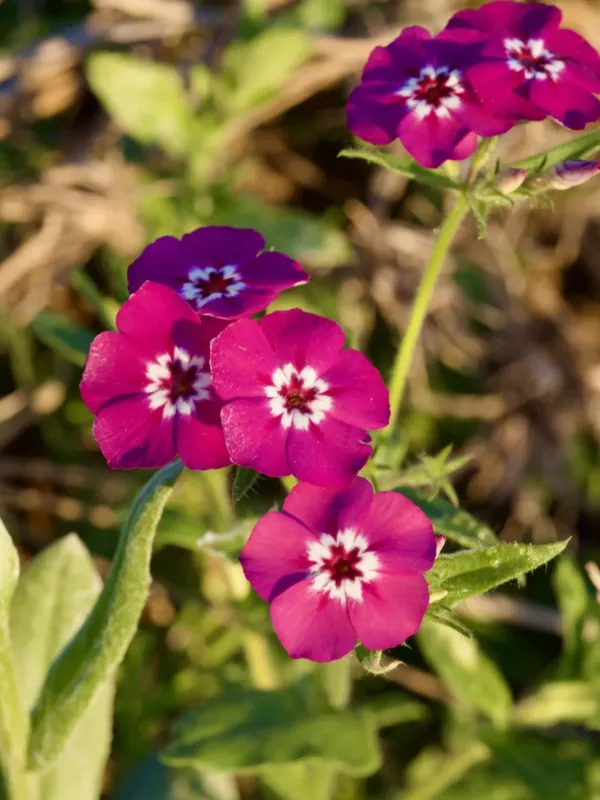
Description
Sowing dates
Drummond phlox is a popular annual herbaceous plant belonging to the Polemoniaceae family, known for its vibrant and diverse color palette.
For early bloom, seeds should be sown indoors in late winter or early spring, lightly covering them as they require light to germinate.
Outdoor sowing can be performed once the danger of frost has completely passed and the soil has warmed up to at least 12 degrees Celsius.
When planting, provide a spacing of 15–20 cm for compact varieties, which allows for optimal air circulation and prevents overcrowding.
Germination typically occurs within two weeks, provided the soil remains consistently moist and is kept in a warm, sheltered location.
Growing requirements
This species is native to Texas, USA, which determines its primary requirement: it thrives best in full sun exposure throughout the day.
The ideal soil for Phlox drummondii is well-drained, fertile, and slightly loamy, ensuring that the roots are not subjected to waterlogging.
Although it is moderately drought-tolerant once established, regular irrigation during dry spells is recommended to sustain abundant flowering.
Avoid planting in areas with heavy clay soils that retain excessive moisture, as this significantly increases the risk of root rot pathogens.
Supplemental feeding with a balanced liquid fertilizer during the peak blooming season helps maintain the plant's vigor and decorative quality.
Main diseases and pests
Powdery mildew is the most common fungal challenge for phlox, appearing as a white, dusty film on the foliage during humid conditions.
Insect pests, including spider mites and various types of aphids, may attack the plants, especially during hot and dry summer months.
To mitigate the risk of disease, gardeners should focus on thinning out dense plantings and removing any affected parts of the plant immediately.
The use of broad-spectrum fungicides or biological controls is recommended if an infestation or infection becomes widespread across the garden plot.
Good sanitation practices, such as clearing plant debris at the end of the season, are essential for preventing the carry-over of pests and diseases.
Harvesting
Drummond phlox is primarily utilized as a versatile ornamental crop for borders, container gardening, and mass plantings in landscaping.
Cut flowers are increasingly used in professional floristry because of their ability to remain vibrant in floral arrangements for an extended duration.
Seed harvesting is conducted when the seed capsules turn brown and dry, which indicates that the embryos are fully developed and mature.
Once collected, capsules should be dried in a ventilated area, threshed to release the seeds, and stored in cool, dry conditions for future use.
The longevity of seeds in storage is usually two years, making it easy for growers to propagate their favorite color varieties year after year.