
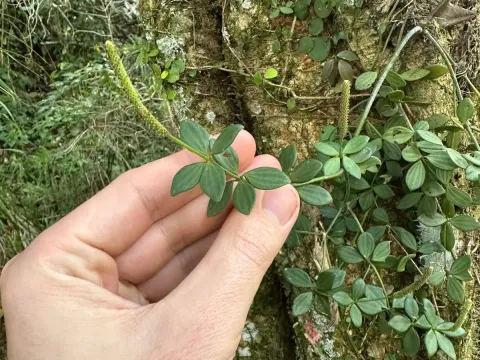
Peperomia
Peperomia Ruiz et Pav.
Peperomia is a diverse genus of ornamental plants belonging to the family Piperaceae. These plants originate primarily from the tropical and subtropical regions of Central and South America, where they typically thrive in humid forest understories and epiphytic niches.
What the section contains
 Hybrids of Peperomia marmorata and Peperomia peruviana
Hybrids between Peperomia marmorata and Peperomia peruviana
Hybrids of Peperomia marmorata and Peperomia peruviana
Hybrids between Peperomia marmorata and Peperomia peruviana
 Peperomia
 rubella x Peperomia verticillata
Peperomia
Peperomia rubella x Peperomia verticillata
 Peperomia albovittata
 C. DC.
Peperomia albovittata
Peperomia albovittata C. DC.
 Peperomia argyreia
 (Miq.) E. Morren
Peperomia argyreia x rotundifolia
Peperomia argyreia x Peperomia rotundifolia
Peperomia Argyreia-Caperata
Peperomia argyreia x Peperomia caperata
Peperomia Argyreia-Marmorata
Peperomia argyreia x Peperomia marmorata
Peperomia argyreia
Peperomia argyreia (Miq.) E. Morren
Peperomia argyreia x rotundifolia
Peperomia argyreia x Peperomia rotundifolia
Peperomia Argyreia-Caperata
Peperomia argyreia x Peperomia caperata
Peperomia Argyreia-Marmorata
Peperomia argyreia x Peperomia marmorata
 Peperomia caperata
 Yunck.
Peperomia caperata hybrid
Peperomia caperata x Peperomia peruviana
Peperomia caperata
Peperomia caperata Yunck.
Peperomia caperata hybrid
Peperomia caperata x Peperomia peruviana
 Peperomia clusiifolia
 (Jacq.) Hook.
Peperomia clusiifolia
Peperomia clusiifolia (Jacq.) Hook.
 Peperomia deppeana
 Cham. & Schltdl.
Peperomia Deppeana-Quadrifolia
Peperomia deppeana x Peperomia quadrifolia
Peperomia deppeana
Peperomia deppeana Cham. & Schltdl.
Peperomia Deppeana-Quadrifolia
Peperomia deppeana x Peperomia quadrifolia
 Peperomia hybrid
Peperomia marmorata
Peperomia marmorata Hook. f.
Peperomia hybrid
Peperomia hybrid
Peperomia marmorata
Peperomia marmorata Hook. f.
 Peperomia marmorata x metallica
Peperomia marmorata Hook. f. x Peperomia metallica L. Linden & Rodigas
Peperomia marmorata x metallica
Peperomia marmorata Hook. f. x Peperomia metallica L. Linden & Rodigas
 Peperomia metallica
 L. Linden & Rodigas
Peperomia metallica
Peperomia metallica L. Linden & Rodigas
 Peperomia obtusifolia
 (L.) A. Dietr.
Peperomia obtusifolia
Peperomia obtusifolia (L.) A. Dietr.
 Peperomia orba
 G. S. Bunting
Peperomia orba
Peperomia orba G. S. Bunting
 Peperomia peruviana
 (Miq.) Dahlst.
Peperomia Piccolo Banda
Peperomia albovittata C. DC. x P. argyreia (Miq.) É. Morren
Peperomia peruviana
Peperomia peruviana (Miq.) Dahlst.
Peperomia Piccolo Banda
Peperomia albovittata C. DC. x P. argyreia (Miq.) É. Morren
 Peperomia polybotrya
 Kunth
Peperomia polybotrya
Peperomia polybotrya Kunth
 Peperomia prostrata
 B. S. Williams
Peperomia prostrata
Peperomia prostrata B. S. Williams
 Peperomia pseudovariegata
 C. DC.
Peperomia pseudovariegata
Peperomia pseudovariegata C. DC.
 Peperomia pseudovariegata sarcophylla
Peperomia pseudovariegata C. DC. var. sarcophylla (Sodiro) Trel. & Yunck.
Peperomia pseudovariegata sarcophylla
Peperomia pseudovariegata C. DC. var. sarcophylla (Sodiro) Trel. & Yunck.
 Peperomia puteolata
 Trel.
Peperomia puteolata
Peperomia puteolata Trel.
 Peperomia quadrangularis
 (J. V. Thomps.) A. Dietr.
Peperomia quadrangularis
Peperomia quadrangularis (J. V. Thomps.) A. Dietr.
 Peperomia quadrangularis x puteolata
Peperomia quadrangularis x Peperomia puteolata
Peperomia quadrangularis x puteolata
Peperomia quadrangularis x Peperomia puteolata
 Peperomia quadrifolia
 (L.) Kunth
Peperomia quadrifolia
Peperomia quadrifolia (L.) Kunth
 Peperomia rotundifolia
 (L.) Kunth
Peperomia rotundifolia
Peperomia rotundifolia (L.) Kunth
 Peperomia rubella
 (Haw.) Hook.
Peperomia rubella
Peperomia rubella (Haw.) Hook.
 Peperomia strawii
 Hutch. ex Pino & Klopf.
Peperomia strawii
Peperomia strawii Hutch. ex Pino & Klopf.
 Peperomia tetraphylla
 (G. Forst.) Hook. & Arn.
Peperomia tetraphylla
Peperomia tetraphylla (G. Forst.) Hook. & Arn.
 Peperomia verticillata
 (L.) A. Dietr.
Peperomia verticillata
Peperomia verticillata (L.) A. Dietr.
 Peperomia vestita
 C. DC.
Peperomia vestita
Peperomia vestita C. DC.
Peperomia
Environmental conditions must be managed carefully to ensure optimal growth. The ideal temperature range is between 18°C and 25°C, with protection from drafts and thermal fluctuations. Sudden drops in temperature are detrimental to the health and leaf retention of these specimens.
The substrate must be well-draining, loose, and aerated. A professional mixture often consists of peat, perlite, and bark to mimic the epiphytic conditions of their natural habitat. Proper drainage is essential to prevent waterlogging and subsequent root issues.
Light requirements for Peperomia include bright, indirect sunlight. While some varieties tolerate lower light levels, sufficient brightness is necessary to maintain the vibrant variegation and compact growth habit desired for high-quality production.
Irrigation practices must be precise. The plant prefers to have its soil dry out partially between waterings. Excessive humidity in the root zone can lead to rapid decay, as the plants have succulent tendencies that make them prone to rotting when overwatered.
Common pests that affect Peperomia in cultivation include mealybugs, spider mites, and scale insects. These organisms can severely inhibit plant growth and damage the aesthetic value of the foliage if left unchecked.
Fungal diseases, specifically root rot, are the most frequent threat to Peperomia crops. These diseases are usually triggered by overly moist soil conditions or poor ventilation, which create a favorable environment for pathogens such as Pythium or Phytophthora.
Integrated Pest Management (IPM) is recommended for commercial growers. This involves regular scouting for pests, maintaining optimal sanitation standards in the greenhouse, and utilizing biological or chemical control agents when threshold levels are reached.
Nutrient deficiencies or toxicity can manifest as chlorosis or necrosis on the leaf margins. It is important to apply balanced, water-soluble fertilizers during the growing season to ensure that the plant has the essential macronutrients and micronutrients.
Proper sanitation, including the removal of dead or decaying plant material, is crucial for preventing the spread of diseases. Ensuring proper air circulation between individual plants in a production batch can significantly decrease the risk of fungal outbreaks.