
Peperomia marmorata x metallica
Peperomia marmorata Hook. f. x Peperomia metallica L. Linden & Rodigas
Description
Growing requirements
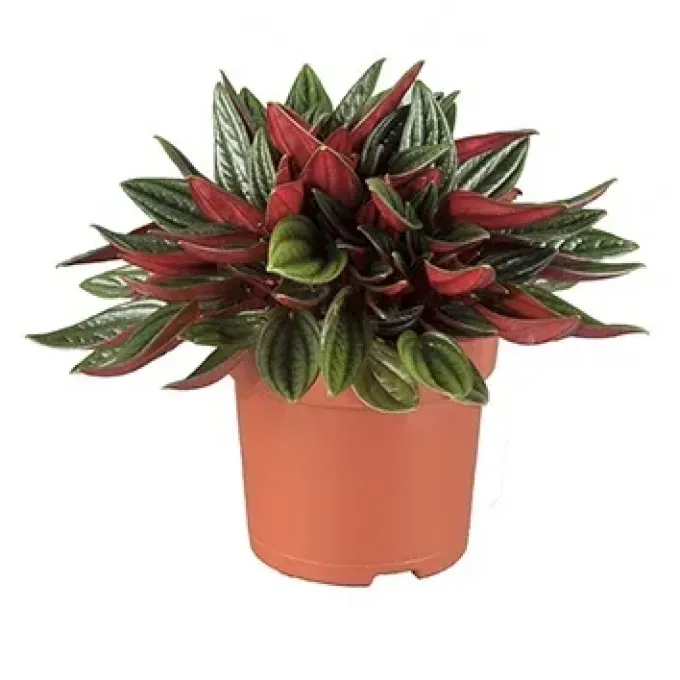
Peperomia marmorata x metallica is a distinguished ornamental hybrid belonging to the Piperaceae family. This cultivar is appreciated for its unique foliage, which exhibits a stunning metallic sheen and pronounced venation, reflecting its parentage from South American tropical forest species.
The plant thrives in stable environmental conditions, requiring temperatures between 20°C and 25°C. It is highly sensitive to cold drafts and sudden temperature fluctuations, which can lead to leaf drop and stunted development of the plant's succulent structure.
Regarding light requirements, this cultivar prefers bright, indirect sunlight. Exposure to direct solar radiation can damage the leaf tissue, causing bleaching or scorching, while insufficient light levels will result in the loss of the characteristic marble-like leaf patterns.
The ideal growing medium is a loose, well-draining soil mix that allows for optimal aeration. A combination of peat, leaf mold, and perlite or coarse sand is recommended to prevent water stagnation, which is critical for maintaining healthy root systems.
Agrotechnical maintenance involves regular, moderate irrigation. It is essential to allow the top layer of the substrate to dry out between waterings. Maintaining a moderate ambient humidity is beneficial, though the plant should be kept away from excessive moisture on the leaf surfaces.
Main diseases and pests
The primary health threats for this culture include fungal infections caused by overwatering. These pathogens target the root system, often leading to rapid tissue decay and eventual plant collapse if not addressed early with proper soil moisture management.
Spider mites are the most common pests, particularly in environments with low air humidity. They thrive on the underside of leaves, causing discoloration and a loss of the characteristic luster, which significantly reduces the plant's ornamental value.
Mealybugs represent another potential threat, often appearing as small, white, cottony masses in leaf axils. Infestations should be treated immediately with horticultural soap or systemic insecticides suitable for indoor use.
Preventive measures include maintaining proper air circulation around the plant and routine inspection of the foliage for early signs of pest activity. Keeping the leaves clean and dust-free is essential for plant respiration and overall vigor.
If rot symptoms appear, immediate action must be taken: remove the infected parts, reduce irrigation, and consider repotting into fresh, sterilized soil to restore the plant's health and vigor.