
Peperomia prostrata
Peperomia prostrata B. S. Williams
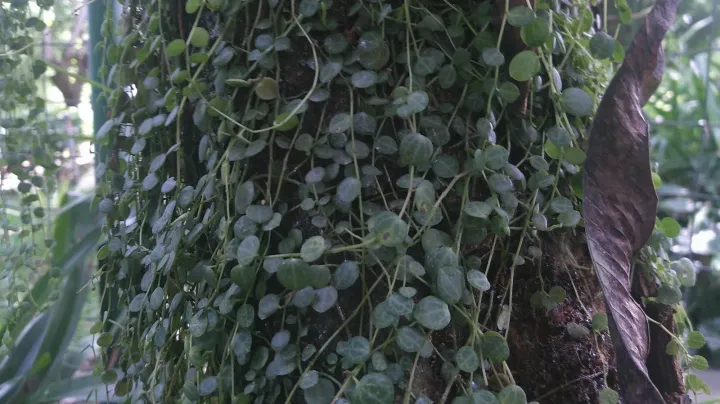
Description
Growing requirements
Peperomia prostrata, belonging to the Piperaceae family, is a captivating trailing plant native to the tropical rainforests of Brazil. In its natural environment, it thrives as an epiphyte, often growing on mossy surfaces or tree bark.
To ensure healthy growth, this plant requires bright, indirect light. Direct sunlight should be strictly avoided as it can scorch the small, delicate leaves and cause the plant to lose its attractive, bead-like appearance.
The optimal temperature range is between +20 °C and +25 °C. The plant is quite sensitive to cold drafts and fluctuating temperatures, making it essential to keep it in a stable environment, away from air conditioning vents or open windows in winter.
Choosing the right soil is crucial for success. A well-draining, airy medium is necessary to prevent root rot. A mixture of peat, perlite, and orchid bark is highly recommended to mimic the plant's natural epiphytic growing conditions.
Watering requires careful monitoring. The plant should be watered only when the top layer of the soil feels dry to the touch. Due to its semi-succulent nature, Peperomia prostrata stores moisture in its leaves and can easily suffer if kept in waterlogged conditions.
Main diseases and pests
Common pests that may affect this culture include mealybugs, which often hide in the crevices of the trailing stems, and spider mites, particularly if the indoor environment has low humidity.
The most significant threat to plant health is root rot caused by overwatering or poor drainage. Keeping the soil well-aerated and using fungicides at the first sign of decay can help maintain the longevity of the plant.