
Peperomia quadrifolia
Peperomia quadrifolia (L.) Kunth
Description
Growing requirements
Peperomia quadrifolia is a perennial evergreen species belonging to the Piperaceae family. Originating from the tropical regions of Central and South America, this plant often grows as an epiphyte, utilizing its succulent features to thrive in diverse forest habitats.
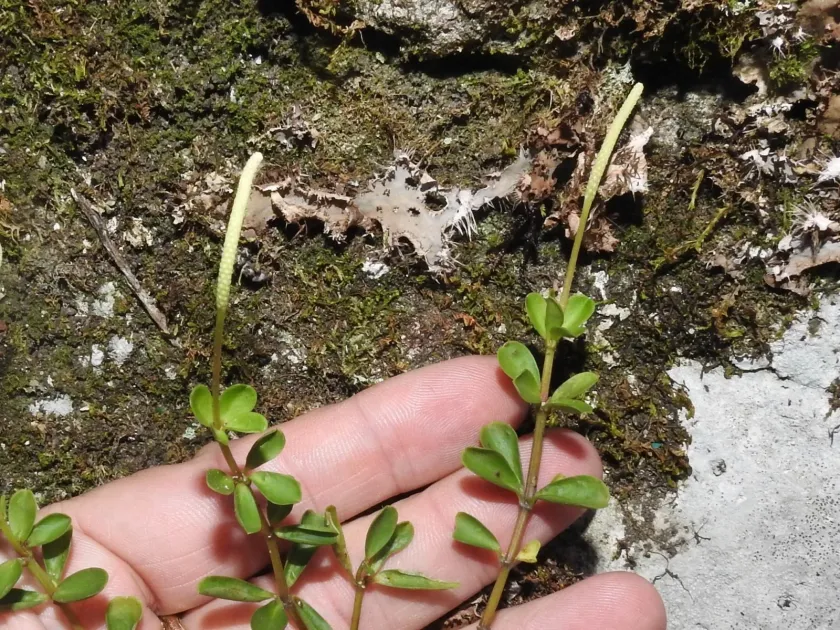
The botanical structure is characterized by its distinct whorled leaves, which grow in groups of four along thin, trailing stems. These leaves are succulent in nature, serving as reservoirs that allow the plant to withstand intermittent periods of dry conditions.
Climate requirements for successful cultivation include a preference for bright, indirect light and ambient temperatures consistently between 18°C and 25°C. Exposure to direct sunlight must be avoided to prevent foliar damage and leaf scorch.
Soil management is critical for this crop, requiring a well-aerated, porous substrate. A mix of peat, perlite, and pine bark is typically used to ensure adequate drainage and proper aeration, which are essential to prevent root asphyxiation.
Regarding its economic use, Peperomia quadrifolia is primarily cultivated as an ornamental plant for indoor horticulture and terrarium design. Its compact growth habit and foliage texture make it a popular choice for vertical gardens and domestic interiors.
Main diseases and pests
The primary threat to the vitality of the crop is the over-accumulation of water in the root zone, which facilitates the development of various fungal pathogens. Maintaining a dry surface layer between waterings is the best preventative strategy.
Common pests include spider mites, mealybugs, and scale insects, which thrive in environments with low humidity. Regular scouting and the application of systemic or contact insecticides are necessary to maintain plant health and aesthetic value.