
Peperomia metallica
Peperomia metallica L. Linden & Rodigas
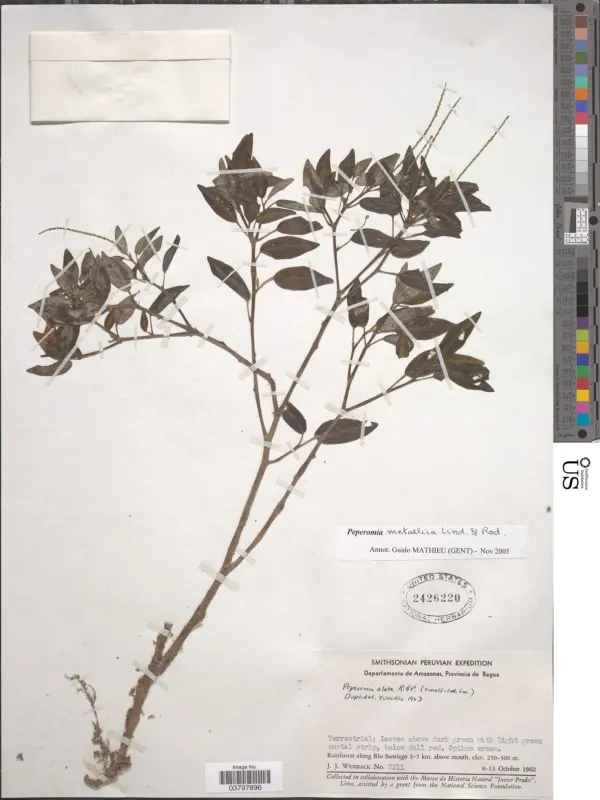
Description
Growing requirements
Peperomia metallica is a compact herbaceous perennial plant belonging to the Piperaceae family. Originating from the tropical rainforests of South America, this species has adapted to growing in shaded, humid environments, often clinging to trees or rocky substrates in its natural habitat.
The plant is highly valued for its striking botanical features, which include reddish stems and lanceolate leaves with a deep olive-green color and a distinctive metallic luster. The contrasting pale central vein provides a sophisticated aesthetic, reaching typical heights of up to 30 centimeters.
The cultivation requirements demand a stable climate with temperatures ranging from +20°C to +25°C. It is essential to protect the plants from drafts and sudden temperature drops, which can severely stress the plant and inhibit its metabolic activities and ornamental growth.
Regarding soil requirements, the substrate must be highly porous and well-draining. A mix consisting of peat, leaf mold, and coarse sand or perlite is recommended. This prevents waterlogging, which is a common cause of failure when cultivating this species under indoor conditions.
In terms of agricultural and horticultural use, Peperomia metallica is strictly utilized as an ornamental crop. It is popular in commercial interior design and greenhouse production, particularly for enclosed terrariums or wardian cases where high humidity levels can be maintained consistently.
Main diseases and pests
The main threats to crop health are fungal diseases resulting from improper irrigation management. Overwatering and poor soil aeration lead to root rot, which is often irreversible if not detected at the very early stages of plant deterioration.
Common pests include mealybugs and spider mites, which thrive in low-humidity environments. Maintaining proper airflow and humidity levels is essential for effective integrated pest management to ensure the longevity and decorative appeal of the plant.