
Peperomia puteolata
Peperomia puteolata Trel.
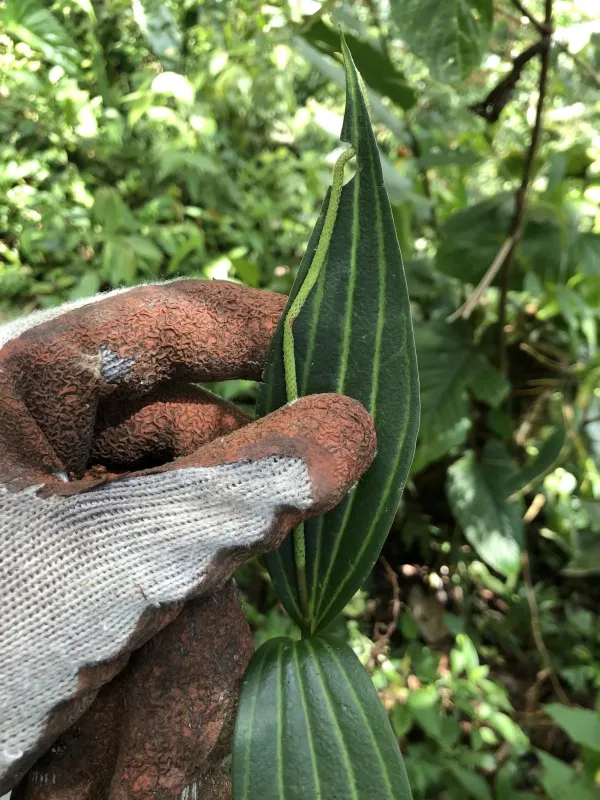
Description
Growing requirements
Peperomia puteolata is a decorative plant species belonging to the Piperaceae family. Originating from the tropical rainforests of South America, this plant is valued for its unique striped foliage that resembles a watermelon vine.
The climate requirements for this culture include consistent warmth, ideally between 20°C and 25°C. As a tropical plant, it thrives in environments with high ambient humidity, though it adapts moderately well to standard room conditions.
Soil requirements are strict regarding drainage and aeration. The substrate should be a well-draining mixture of peat moss, perlite, and bark to prevent the compaction of the root zone, which is highly prone to rot.
Lighting should be bright but indirect. Intense, direct sunlight can cause leaf scorching and fading of the beautiful striped pattern, while insufficient light leads to leggy growth and loss of compactness.
Watering practices are the most critical aspect of agrotechnics for this species. Allow the substrate to dry out significantly between watering sessions to ensure oxygen reaches the roots, preventing fungal pathogen colonization.
Main diseases and pests
The main threats to Peperomia puteolata are root rot and stem rot, typically caused by overwatering or cold, wet soil conditions. These pathogens can destroy the root system within a few days.
Pest issues frequently involve spider mites and mealybugs. Spider mites are particularly problematic during winter months when indoor heating causes dry air, facilitating their rapid reproduction.
To control pests, it is recommended to use systemic insecticides or neem oil sprays. Manual removal with a cotton swab dipped in alcohol can be effective for small, localized mealybug infestations.
Nematodes are another potential risk if contaminated potting soil is used. This often results in stunted growth and swelling on the roots, requiring the complete removal of the affected specimen.
Maintaining a clean growing environment and ensuring proper airflow around the plant are essential cultural practices to mitigate the risk of common fungal and insect outbreaks.