
Peperomia tetraphylla
Peperomia tetraphylla (G. Forst.) Hook. & Arn.
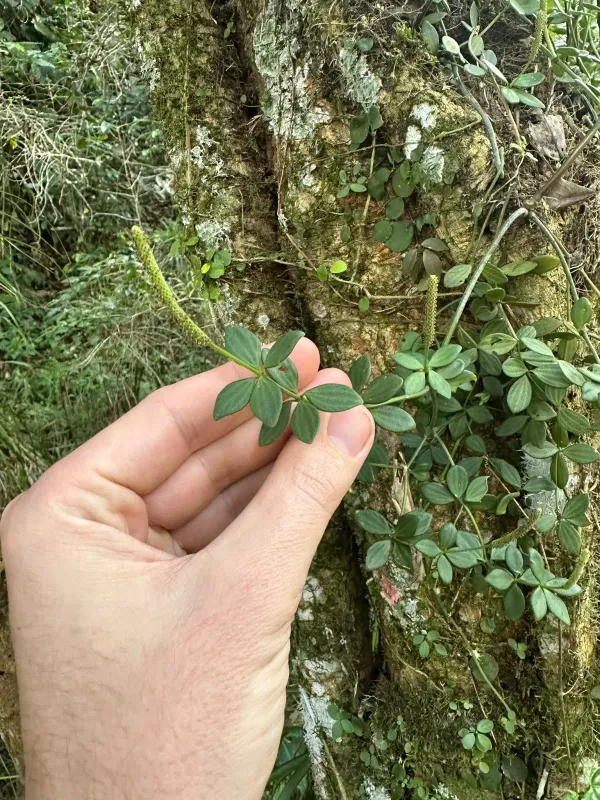
Description
Growing requirements
Peperomia tetraphylla belongs to the Piperaceae family. It is a perennial tropical plant naturally distributed across various regions of Africa, Southeast Asia, and the Pacific Islands, where it thrives in humid forest habitats as an epiphyte or lithophyte.
The plant is characterized by its creeping or trailing stems and distinct whorled leaves. Typically, four leaves emerge from each node, creating a dense, succulent appearance. The foliage is thick, rounded, and often features contrasting light-colored venation against deep green tissue.
The culture requires bright, indirect light to maintain its compact growth habit and leaf coloration. Direct sun exposure should be avoided as it can scorch the foliage. The ideal ambient temperature ranges between 20°C and 25°C, ensuring the plant is kept away from drafts or heating vents.
Soil requirements focus on high porosity and drainage capabilities. A mixture containing peat moss, pine bark, and perlite provides an optimal balance for root aeration. It is essential to use pots with sufficient drainage holes to prevent the saturation of the substrate.
Cultural practices include a specialized watering schedule where the soil is allowed to dry out significantly between waterings. During the active growing season, balanced liquid fertilizer applied at half-strength supports steady development. Propagation is commonly achieved through stem cuttings in warm, humid conditions.
Main diseases and pests
The most common pests affecting this culture include mealybugs and spider mites. These organisms can colonize the dense whorls of leaves, making manual removal difficult. Proactive use of systemic horticultural oils or soaps is recommended for effective management.
The primary pathology for Peperomia tetraphylla is root rot caused by Pythium or Phytophthora species. This is almost always triggered by overwatering or poor drainage. Maintaining a dry crown and proper irrigation intervals are the most effective preventative measures against fungal pathogens.