
Hybrids of Peperomia marmorata and Peperomia peruviana
Hybrids between Peperomia marmorata and Peperomia peruviana
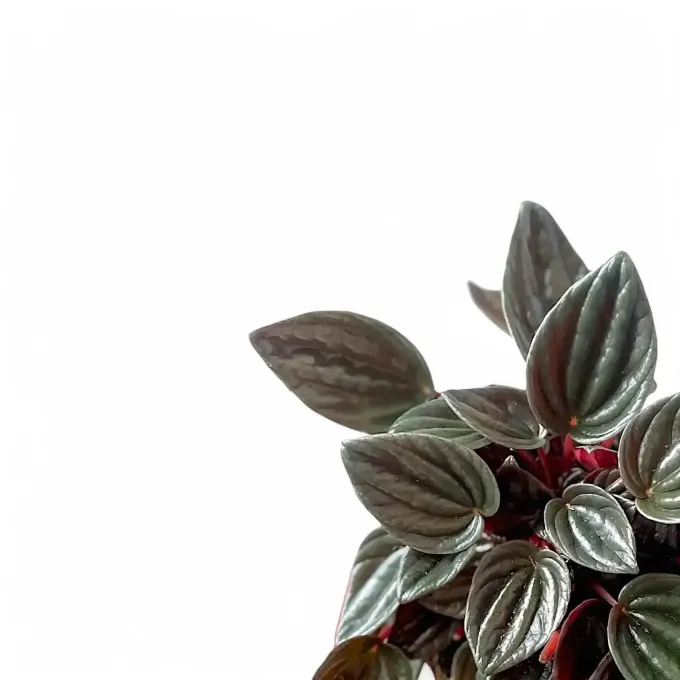
Description
Growing requirements
These hybrids belong to the Piperaceae family, characterized by their ornamental, succulent-like leaves. By crossing Peperomia marmorata and Peperomia peruviana, breeders have developed specimens that feature unique, textured foliage and a compact growth habit suitable for indoor conditions.
Optimal light for these plants consists of bright, indirect exposure. Placing them in direct sun can cause leaf scorch, while too little light will cause the plant to become leggy and lose its characteristic patterns, making a position near an east-facing window ideal.
Temperature management is critical for these species; they thrive in a standard range of 18°C to 25°C. They should be shielded from sudden temperature drops and cold drafts, especially during the winter months, to avoid plant stress.
The growing medium must be porous and well-draining. A mix of peat, pine bark, and perlite or coarse sand ensures that roots receive adequate oxygen while allowing water to drain quickly, preventing the common issue of soil compaction.
Watering practices define the success of this crop. Allow the substrate to dry out at least halfway down the pot before irrigating again. Overwatering is the most frequent cause of loss in Peperomia, as the root system is highly prone to asphyxiation in saturated soils.
Main diseases and pests
Root rot caused by Phytophthora or Pythium species is the primary agricultural threat. It is almost exclusively the result of excessive moisture and poor soil aeration, leading to the rapid decay of the vascular system.
Insect pests such as mealybugs often hide in the tight junctions between the leaf petiole and the main stem. Their presence can be identified by a white, cottony substance, which requires immediate mechanical or chemical intervention.
Spider mites are another common challenge in dry, warm environments. They pierce leaf tissues, leading to chlorosis and eventual leaf drop. Maintaining proper hygiene and occasionally misting the ambient air can deter mite outbreaks.
Fungal diseases like Botrytis (gray mold) can infect the plant during periods of high humidity and poor airflow. Managing the microclimate is the most effective way to prevent the spread of such fungal spores.
Always inspect new additions to the collection before introducing them to the main group. Early detection of pests and pathogens is the key to preventing large-scale infestation and maintaining the health of the hybrid stock.