
Peperomia polybotrya
Peperomia polybotrya Kunth
Description
Growing requirements
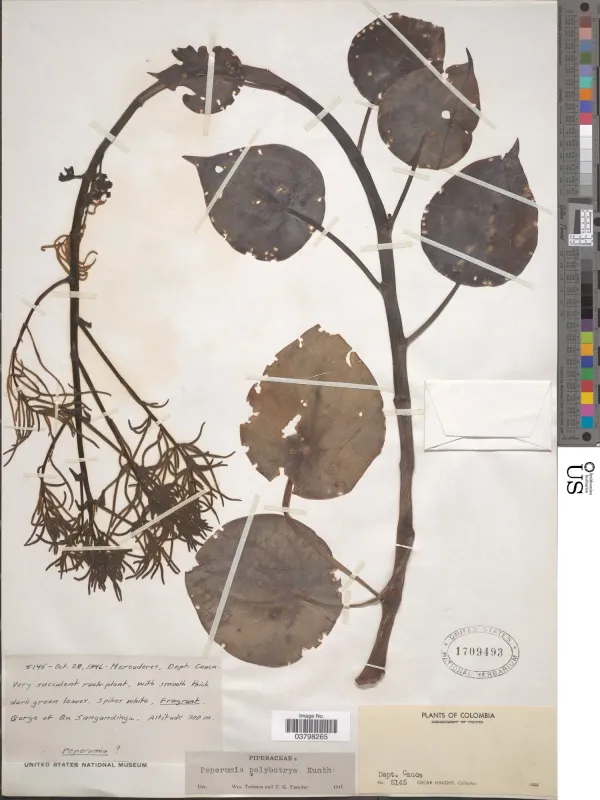
Peperomia polybotrya, commonly known as the coin-leaf peperomia, belongs to the Piperaceae family. Originating from the tropical regions of Colombia and Peru, this species is highly valued for its striking, heart-shaped, succulent-like leaves.
In terms of growth habits, it is a compact, slow-growing perennial that rarely exceeds 40 centimeters in height. Its morphological characteristics include thick, fleshy, dark green foliage with a prominent gloss, making it a popular choice for indoor horticulture.
The crop thrives in bright, indirect light conditions. While it can tolerate lower light levels, excessive shade may lead to etiolation, resulting in elongated stems and a loss of the plant's characteristic compact appearance.
Soil requirements for this species involve a well-draining, aerated substrate. A standard mix for epiphytic or semi-succulent plants, including peat moss, perlite, and pine bark, provides the necessary root aeration and moisture retention balance.
Temperature management is crucial; the plant prefers a range between 18°C and 25°C. Exposure to temperatures below 15°C should be avoided, as cold stress often results in wilting and susceptibility to pathogen attacks.
Main diseases and pests
Root rot is the most significant threat to Peperomia polybotrya, primarily caused by overwatering and the use of heavy, water-retentive soils that lack sufficient drainage.
Pest issues often involve common indoor plant pests such as mealybugs, aphids, and spider mites. These organisms thrive in environments with poor air circulation and low humidity.
Monitoring the undersides of leaves and the junction between leaves and stems is essential for early detection of pest colonies before they cause significant physiological damage.
Integrated pest management protocols, including the use of neem oil or insecticidal soaps, are recommended for maintaining plant health without the use of harsh chemicals.
Proper environmental control, specifically maintaining consistent soil moisture levels and avoiding leaf wetting during cooler periods, remains the most effective prophylactic measure against fungal and bacterial diseases.