
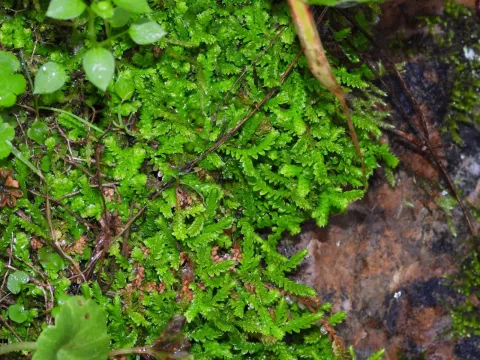
Selaginella
Selaginella
Selaginella belongs to the family Selaginellaceae and is often referred to as spike moss. These plants are primarily native to tropical regions, where they thrive in the understory of dense forests with high levels of atmospheric humidity.
What the section contains
 Lesser clubmoss
Selaginella selaginoides
Lesser clubmoss
Selaginella selaginoides
 Meadow spikemoss
Selaginella apoda
Meadow spikemoss
Selaginella apoda
 Peacock Spikemoss
Selaginella uncinata
Peacock Spikemoss
Selaginella uncinata
 Ruby-red selaginella
Selaginella erythropus
Ruby-red selaginella
Selaginella erythropus
 Selaginella
 hybrids
Selaginella
Selaginella hybrids
 Selaginella balansae
Selaginella belluta
Selaginella belluta
Selaginella biformis
Selaginella biformis
Selaginella decipiens
Selaginella decipiens
Selaginella balansae
Selaginella balansae
Selaginella belluta
Selaginella belluta
Selaginella biformis
Selaginella biformis
Selaginella decipiens
Selaginella decipiens
 Selaginella delicatula
Selaginella delicatula
Selaginella delicatula
 Selaginella densa
Selaginella densa
Selaginella densa
 Selaginella hordeiformis
Selaginella hordeiformis
Selaginella hordeiformis
 Selaginella intermedia
Selaginella intermedia
Selaginella intermedia
 Selaginella kraussiana
Selaginella kraussiana
Selaginella kraussiana
 Selaginella lepidophylla
Selaginella lepidophylla
Selaginella lepidophylla
 Selaginella martensii
Selaginella martensii
Selaginella martensii
 Selaginella moellendorffii
Selaginella moellendorffii
Selaginella moellendorffii
 Selaginella nipponica
Selaginella opaca
Selaginella opaca
Selaginella nipponica
Selaginella nipponica
Selaginella opaca
Selaginella opaca
 Selaginella plana
Selaginella plana
Selaginella plana
 Selaginella remotifolia
Selaginella remotifolia
Selaginella remotifolia
 Selaginella rossii
Selaginella rossii
Selaginella rossii
 Selaginella stauntoniana
Selaginella stauntoniana
Selaginella stauntoniana
 Selaginella stellata
Selaginella subcordata
Selaginella subcordata
Selaginella stellata
Selaginella stellata
Selaginella subcordata
Selaginella subcordata
 Selaginella tamariscina
Selaginella tamariscina
Selaginella tamariscina
 Selaginella wallichii
Selaginella wallichii
Selaginella wallichii
 Selaginella willdenowii
Selaginella willdenowii
Selaginella willdenowii
 Siberian spikemoss
Selaginella sibirica
Siberian spikemoss
Selaginella sibirica
 Spikemoss
Selaginella denticulata
Spikemoss
Selaginella denticulata
 Swiss clubmoss
Selaginella helvetica
Swiss clubmoss
Selaginella helvetica
Selaginella
The core requirement for successful cultivation is maintaining high humidity, ideally ranging between 60% and 90%. In domestic environments, this is often achieved by using terrariums or specialized greenhouse conditions to mimic their natural habitat.
Temperature management is critical for this species. Most Selaginella varieties prefer a temperate environment ranging from 18 to 24 degrees Celsius. Avoid exposure to cold drafts, which can cause significant stress and wilting of the delicate foliage.
The growing medium must be porous, well-draining, and slightly acidic. A mix consisting of peat, leaf mold, and perlite provides the necessary structure to retain moisture while ensuring adequate aeration for the sensitive root system.
Light levels should be carefully regulated, as these plants prefer indirect or diffused light. Direct sunlight can bleach the leaves and cause structural damage, therefore placement in shaded or north-facing areas is highly recommended.
The most common pests affecting Selaginella are spider mites, which thrive in dry air conditions. Regular monitoring of the foliage and consistent misting are the primary methods for preventing mite infestations in indoor settings.
Mealybugs can also pose a threat to the plant, hiding in the junctions of stems and leaves. If detected, they should be removed manually or treated with targeted organic insecticidal soaps to avoid harsh chemical stress on the plant.
Root rot is a frequent disease caused by overwatering and poor drainage. When the roots remain submerged in water for too long, they lose the ability to transport nutrients, leading to rapid yellowing and eventual decay of the shoots.
To maintain plant health, it is essential to ensure that the water used for irrigation is free from excessive chlorine and mineral salts. Soft, room-temperature water is the best choice for both watering and foliar misting.
Sanitation practices, such as removing dead leaves and ensuring adequate air circulation, are vital to preventing fungal outbreaks. If a fungal infection occurs, isolating the plant and applying a mild fungicide is the recommended course of action.