
Selaginella plana
Selaginella plana
Description
Growing requirements
Selaginella plana is a perennial spore-bearing herbaceous plant belonging to the Selaginellaceae family. In its natural habitat, which spans the tropical regions of Asia and Africa, this plant thrives in dense humid forests, preferring shaded areas with a high concentration of moisture in both the soil and the air.
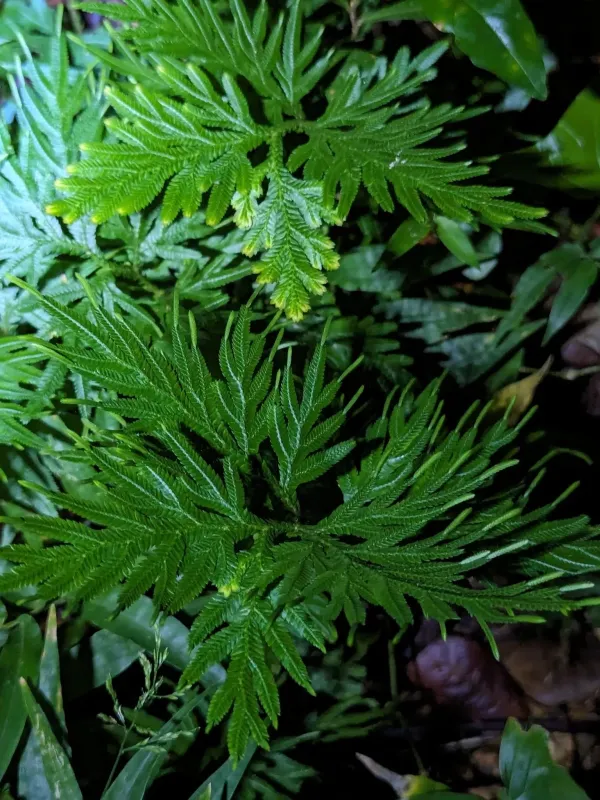
Botanically, the crop is a creeping or ascending shrub with small, densely packed leaves that form thick, carpet-like covers. The plant's root system is relatively shallow, which necessitates consistent moistening of the substrate to prevent the aerial parts from drying out.
For successful cultivation, it is essential to strictly maintain a temperature range between +18 and +24 degrees Celsius. The plant reacts extremely negatively to sudden temperature fluctuations and exposure to direct sunlight, which causes rapid yellowing and death of the delicate branches.
The growing medium must be loose, breathable, and slightly acidic. It is recommended to use mixtures based on peat, shredded sphagnum moss, and leaf mold. A crucial part of the agrotechnology is maintaining air humidity at 70–80%, which is achieved through regular misting or using humidifiers.
In terms of agricultural and horticultural use, Selaginella plana is actively utilized as an ornamental foliage plant for interior landscaping and terrariums. It is highly valued by designers for its ability to create lush green accents in low-light conditions where other plant species struggle to survive.
Main diseases and pests
The primary threat to the plant consists of fungal diseases, which arise due to water stagnation in the pot and poor ventilation. Infestation manifests as the decay of the root system and the appearance of mold growths on the stems.
Among pests, spider mites and mealybugs are the most dangerous for Selaginella. Mites reproduce rapidly in dry air conditions, sucking juices from the leaves, which leads to the deformation and shedding of the green mass.
To combat insects, it is necessary to use systemic insecticides; however, due to the plant's high sensitivity to chemical agents, it is recommended to prioritize biological control methods. Prevention involves regular inspections and the maintenance of optimal humidity levels.
Improper watering often triggers chlorosis of the leaves, which is expressed by the loss of vibrant green color. Using hard or chlorinated water for irrigation negatively affects plant development, therefore, soft filtered or rainwater should be preferred.
The final important risk factor is mechanical damage to fragile stems during transplantation. It is recommended to move the plant using the transfer method to preserve the integrity of the root ball and avoid damaging the delicate root system.