
Meadow spikemoss
Selaginella apoda
Description
Growing requirements
Meadow spikemoss (Selaginella apoda) is a delicate, moss-like perennial plant belonging to the Selaginellaceae family. Native to eastern North America, it naturally thrives in moist, shaded environments such as riverbanks and forest floors.
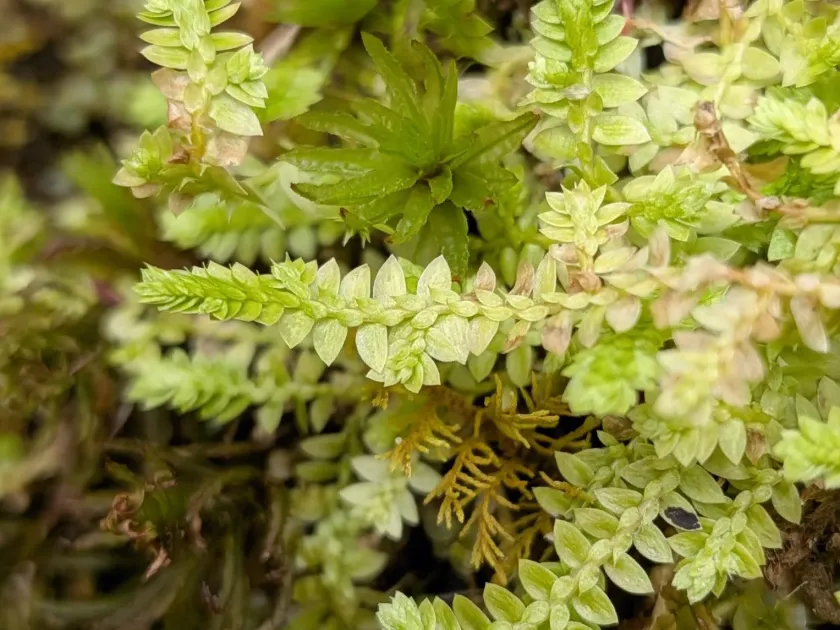
The plant is characterized by its prostrate growth habit, creating dense, bright green mats. Its stems are slender, branching freely, and covered with tiny, imbricate leaves, giving it a distinctive appearance that is highly prized in terrariums.
As a moisture-dependent species, it requires consistently high humidity, ideally maintained above 65%. In agricultural or horticultural settings, it is often grown in closed or semi-closed environments where water loss is minimized.
The plant prefers moderate temperatures ranging from 60°F to 72°F (15°C to 22°C). It is extremely sensitive to direct sunlight, which can rapidly scorch the tender tissues, necessitating filtered light or shade for optimal development.
A well-draining, moisture-retentive, and slightly acidic medium is essential for success. Mixtures consisting of high-quality peat moss and perlite are typically recommended to ensure that the root zone remains damp without becoming waterlogged.
Main diseases and pests
The primary threats to Selaginella apoda cultivation involve fungal pathogens, particularly root rot, caused by poor drainage and excessive moisture saturation in the growing medium. Proper aeration is crucial to mitigate these risks.
Spider mites represent the most significant pest issue, particularly in environments where humidity levels are inadequately maintained. These pests can cause rapid foliage discoloration and decline if left unchecked.
Mealybugs and scale insects may also pose a threat, feeding on the succulent stems of the plant. Regular monitoring of the foliage and stems is necessary for early detection and manual or mild chemical intervention.
Chemical control should be approached with caution. Because the plant is small and sensitive, systemic pesticides should be used at lower concentrations to avoid phytotoxic responses that can damage the delicate plant tissue.
Maintaining a clean growing environment and avoiding overcrowding are essential strategies to prevent the spread of diseases and pests among the plant populations in greenhouse or nursery settings.