
Swiss clubmoss
Selaginella helvetica
Description
Growing requirements
Swiss clubmoss (Selaginella helvetica) is a member of the Selaginellaceae family, representing a group of vascular cryptogams. This perennial plant is native to mountainous regions across Europe and Asia, thriving in cool, shaded environments.
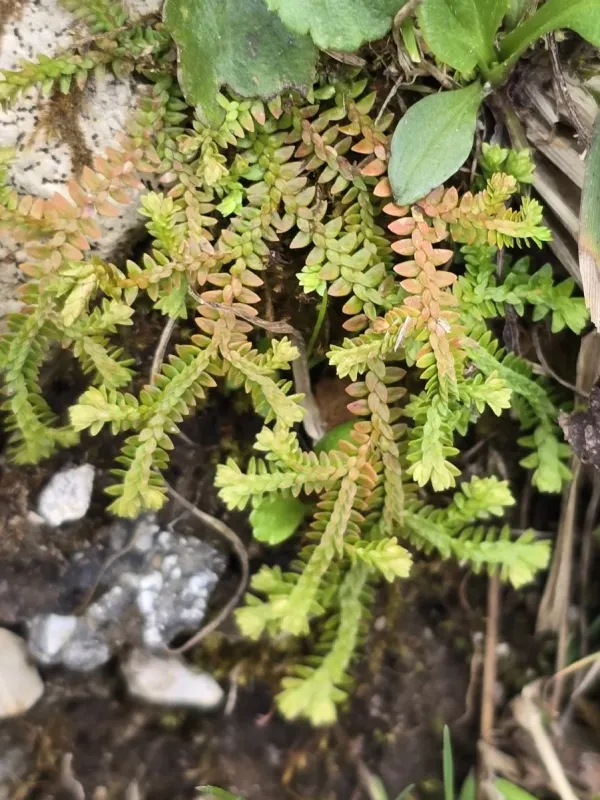
The morphology of the plant consists of creeping, branching stems covered in small, scale-like leaves. It forms dense, moss-like mats that spread along the substrate through adventitious roots developed at the stem nodes.
Regarding climate requirements, this species demands high humidity and protection from direct sunlight, which can quickly desiccate its delicate foliage. It prefers temperatures between 15°C and 20°C throughout the year.
Soil management involves providing a substrate that is consistently moist yet well-draining. Ideal potting mixes often include peat moss or leaf mold to maintain a slightly acidic pH, which mimics the natural forest floor conditions.
Economically, Selaginella helvetica is primarily used in the ornamental industry, specifically in terrariums, vivariums, and specialized indoor gardens where maintaining high humidity is feasible.
Main diseases and pests
The primary threat to Swiss clubmoss is root rot, typically caused by waterlogged soil conditions and poor ventilation, which prevents the roots from accessing necessary oxygen.
Pests such as spider mites and aphids are common in indoor settings, particularly when the ambient humidity drops below the recommended thresholds for this species.
Disease management focuses on preventing stagnant water by using well-draining substrates and ensuring that the foliage is not permanently soaked to avoid fungal outbreaks.
Monitoring for signs of wilting or discoloration is essential, as these are often the first indicators of improper environmental conditions or pest infestation.
Control of infestations should ideally favor mild horticultural soaps or biological control agents to avoid damaging the sensitive cellular structure of the clubmoss.