
Selaginella intermedia
Selaginella intermedia
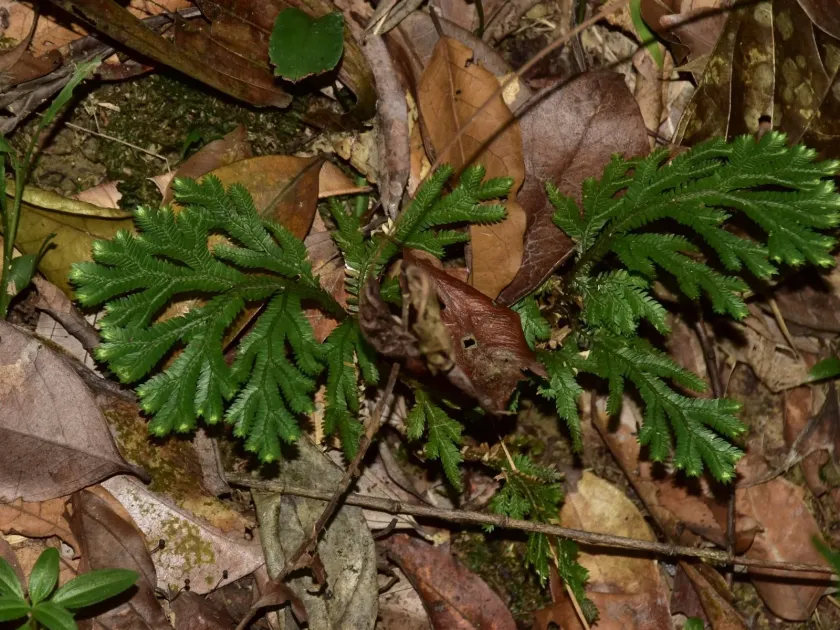
Description
Growing requirements
Selaginella intermedia is a perennial herbaceous plant belonging to the Selaginellaceae family. Native to the humid tropical forests of Asia, it is highly valued for its delicate, fern-like foliage and creeping growth habit, making it an excellent candidate for controlled environments.
Climate requirements for this species are strict, as it thrives in high humidity conditions, ideally ranging from 70% to 90%. Maintaining a constant, warm temperature is essential, with an optimal range between 18°C and 25°C throughout the growing season.
Regarding soil requirements, the culture demands a well-draining, moisture-retentive substrate rich in organic matter. A mixture of peat moss, perlite, and pine bark is often used to ensure proper gas exchange at the root zone while preventing compaction.
Agrotechnical management involves meticulous watering practices. The growing medium must be kept consistently moist but never waterlogged. Regular misting or the use of automated fogging systems is standard procedure to satisfy the plant's physiological needs for atmospheric moisture.
Light management is crucial, as Selaginella intermedia is adapted to low-light conditions. Exposure to direct sunlight is detrimental and can lead to chlorosis or leaf burn. Utilizing diffused or filtered light is necessary to maintain the plant's deep green coloration and structural integrity.
Main diseases and pests
The main phytopathological threats include various fungal infections, particularly those causing root rot and stem blight, usually triggered by excessive humidity levels combined with stagnant air. Maintaining constant airflow is a primary prevention strategy.
Pest pressures primarily include spider mites and mealybugs. These pests exploit dry conditions within the canopy. Integrated pest management, focusing on biological controls and maintaining optimal humidity levels, is recommended for effective long-term crop protection.