
Sea milkwort
Lysimachia maritima
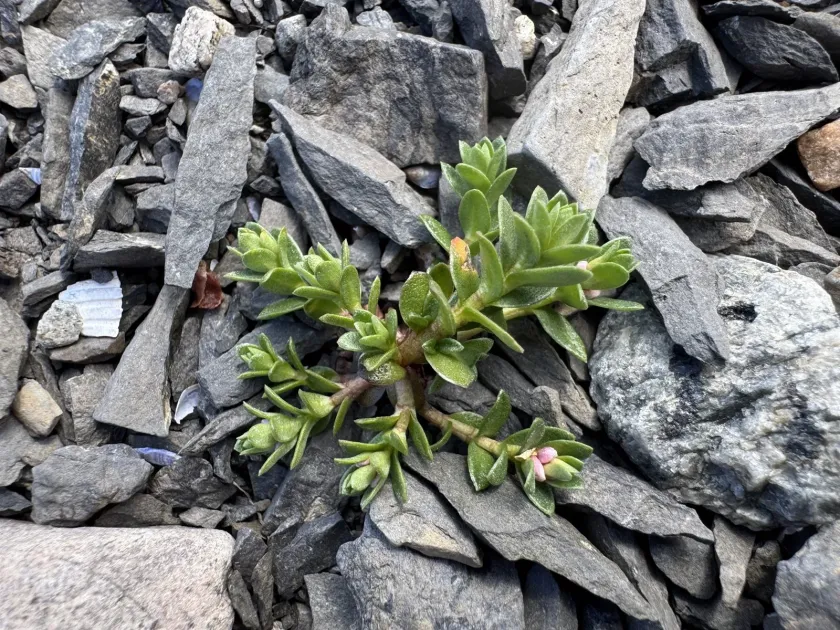
Description
Sowing dates
Sea milkwort, botanically known as Lysimachia maritima and belonging to the Primulaceae family, is a halophyte adapted to high salinity environments. Natural germination typically occurs in early spring when rainfall leaches the salt from the upper soil layers.
For agricultural cultivation, seeds should be sown in early spring once soil temperatures reach 8-10 degrees Celsius. Seed dormancy may require cold stratification to ensure uniform and efficient germination rates across the field.
The seeds are exceptionally small, requiring a shallow sowing depth of no more than 0.5-1 centimeter. Proper soil contact is essential, and light rolling of the seedbed after sowing can significantly improve emergence rates.
Row spacing should be maintained at 20-30 centimeters to facilitate mechanical weeding and ensure that each plant has sufficient access to nutrients and light, which are crucial for early establishment.
Maintaining consistent moisture in the topsoil during the first three weeks is the most critical factor for success. Irrigation, specifically overhead misting, is recommended to prevent the soil surface from crusting or drying out before the seedlings emerge.
Growing requirements
The primary requirement for successful cultivation of sea milkwort is a saline-affected environment. The plant possesses specialized cellular mechanisms to store sodium and chloride ions, allowing it to thrive in saline conditions where traditional crops would fail.
Full sun exposure is mandatory for healthy development. The plant is highly intolerant to shading, which significantly inhibits its ability to accumulate biomass and results in thin, etiolated growth that is less desirable for commercial use.
While adapted to salinity, the plant prefers moist, sandy, or silty soil types with good drainage. Constant water access is beneficial, though the plant can survive short-term drought if salt levels remain within its tolerance range.
Temperature is not a limiting factor, as sea milkwort is highly resilient to both the cold of coastal springs and the heat of summer. It is a perennial plant that can survive multiple growing seasons if soil conditions remain stable.
Optimal pH levels for the soil generally range from slightly acidic to slightly alkaline. Monitoring the ionic balance of the soil is recommended to maximize the plant's growth potential and ensure consistent yield across different coastal plots.
Yield
The yield of sea milkwort is heavily dependent on soil management and the level of salinity. With proper care, commercial growers can achieve yields ranging from 5 to 10 tons of biomass per hectare in a single season.
Biomass production peaks during the mid-summer phase, just before the full bloom stage. Harvesting during this period ensures that the foliage is most succulent and retains the highest concentration of minerals and organic acids.
Sea milkwort is becoming increasingly popular as a niche fodder crop in regions where soil salinity makes conventional agriculture impossible. Its high salt content provides an alternative nutrient source for livestock adapted to coastal foraging.
Multiple harvests can be conducted within one growing season. By leaving enough of the plant base intact during cutting, growers can stimulate rapid regrowth from the perennial root system, effectively extending the harvest window.
Productivity generally declines as the plantation ages, usually after 4 to 5 years. Therefore, planning for rotational replanting every few seasons is essential to maintain high output levels and soil health in saline plots.
Main diseases and pests
Sea milkwort exhibits significant natural resistance to most plant pathogens. Its high tissue salinity acts as an effective chemical defense against common soil-borne bacteria and fungal infections that typically affect agricultural crops.
The main threat is the development of root rot, which typically occurs in areas with stagnant water or poor drainage. Managing soil hydrology is the most effective preventative measure against these conditions.
Pests are rarely a major issue for this crop. In rare cases of infestation by sap-sucking insects like aphids, integrated pest management strategies should be employed to prevent the use of harsh chemicals on the crop.
Weed competition is the most significant hurdle during the first few weeks of growth. Because the seedlings develop slowly at the beginning, keeping the area clear of fast-growing weeds is vital for the survival of the young plants.
Due to its high mineral content and use in food or fodder, strict avoidance of synthetic pesticides is advised. Biological control agents or physical weeding are the preferred methods to manage potential threats.
Harvesting
Harvesting should ideally take place at the beginning of the flowering stage to capture the plant at its most succulent and nutrient-dense state. This ensures the best culinary or nutritional value for the final product.
Mechanical harvesting using custom-set mowing equipment is the standard approach for large-scale operations. The cutting height should be set at least 5-7 centimeters above the soil to preserve the crown for rapid vegetative regeneration.
The harvested biomass is highly perishable due to its succulent nature. Rapid cooling or immediate processing is required to maintain quality and prevent degradation caused by high ambient temperatures during the harvest process.
For seed production, harvesting must be done just before full maturity to prevent the seed capsules from shattering in the field. Monitoring the coloration of the capsules is the best indicator of the optimal harvest timing.
Proper storage involves dry, well-ventilated conditions to prevent mold growth on the succulent leaves. If dried, the foliage retains many of its characteristics, making it suitable for long-term storage and distribution.